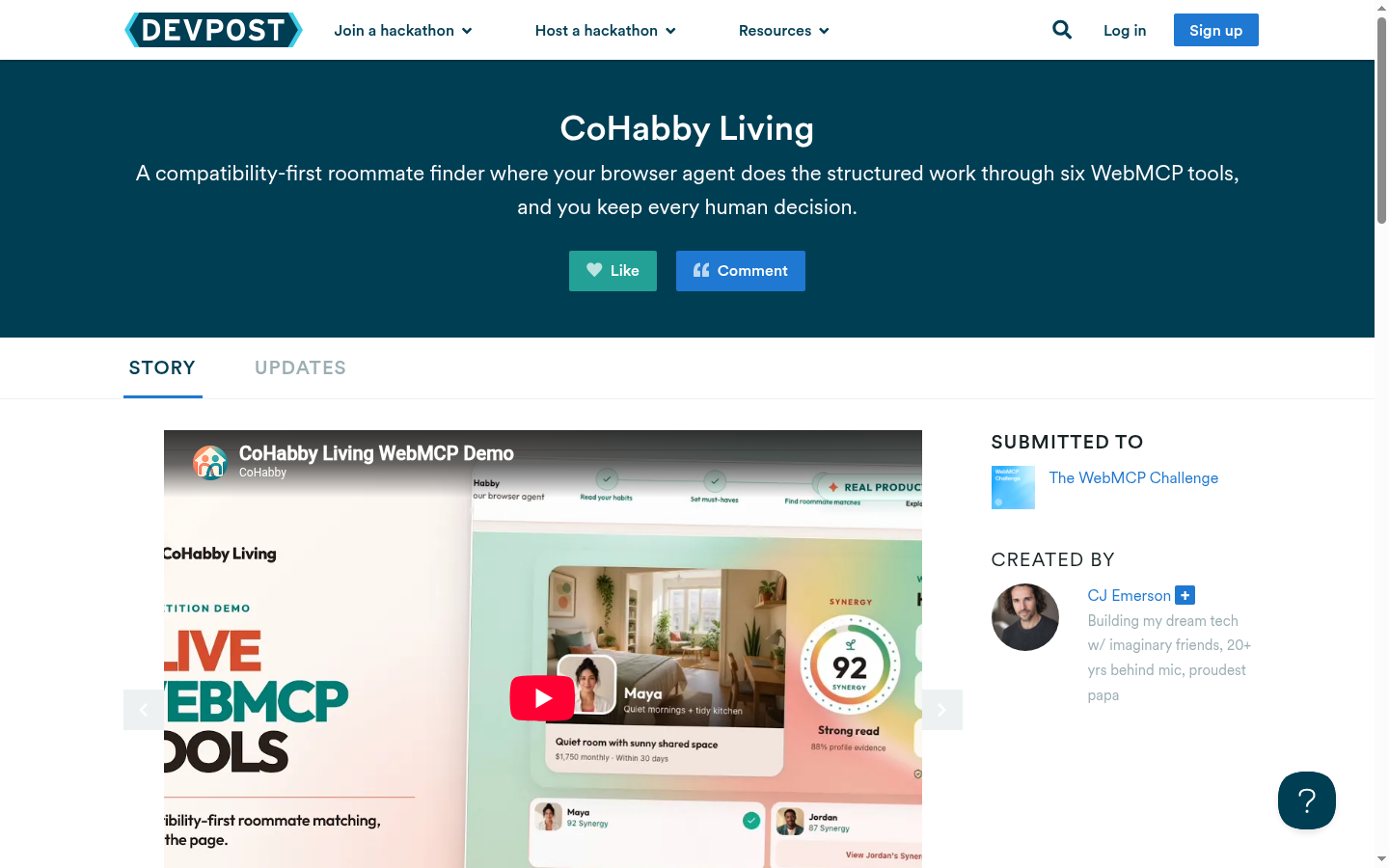
Origin, access model, eligibility, and substitution are reviewer diagnostics, not judging criteria. Authentication requirements are not penalized.
02 The two blind reviews
Two independent reviewers scored this project blind, from a sanitized evidence packet.
Scores are shown separately so the reasoning stays inspectable. A withheld score means the reviewers differed by more than two points.
Reviewer A (round 1)
confidence 75%
Leverage
6 /10
Typed tools improve structured matching, comparison, and reversible staging, but a general agent could perform much of the same work with meaningful UI friction; human decisions remain central.
Evidence cited
Six tools include find_compatible_rooms, compare_shortlist, explain_synergy_match, and prepare_introduction.
Approval and message sending are explicitly not tools; the final click stays human.
Shared state advances through versioned demo states.
Execution
8 /10
The packet gives unusually concrete workflow and state evidence, including version transitions and a no-send safety guarantee; visuals were unavailable.
Evidence cited
Exact deployed revision and READY v1 state are provided.
Demo introduction moves to v9 with no real message sent; draft is editable and staged.
Impact
8 /10
Finding a compatible roommate is a substantial real-life problem for multiple clearly named audiences, and the product focuses on fit rather than mere listings.
Evidence cited
Names traveling nurses, single parents, graduates, retirees, and interns as audiences.
Compares six dimensions of daily life and gives practical reasons for a match.
Creativity
7 /10
Compatibility-first matching plus agent-assisted, human-authored introductions is a meaningful interaction design beyond a standard listing search.
Evidence cited
Person-first, home-as-context framing.
Synergy Lens and editable facts-based hello make the collaboration concrete.
Reviewer B (round 2)
confidence 80%
Leverage
6 /10
Structured matching, explainable synergy, and staged drafts benefit from tools, but a general agent could accomplish much of the visible workflow with moderate friction; human-only decisions remain intentionally outside the tool surface.
Evidence cited
About text specifies six tools, one read-only, and explicit human-only selection/confirmation/send actions.
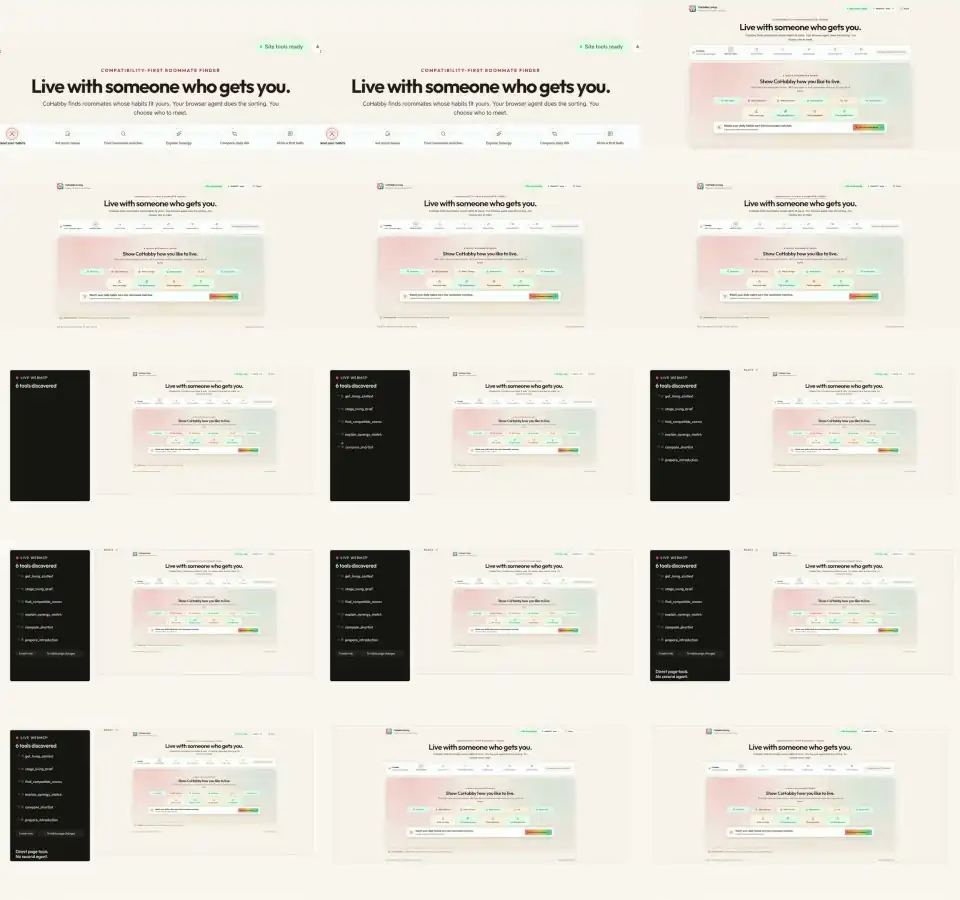
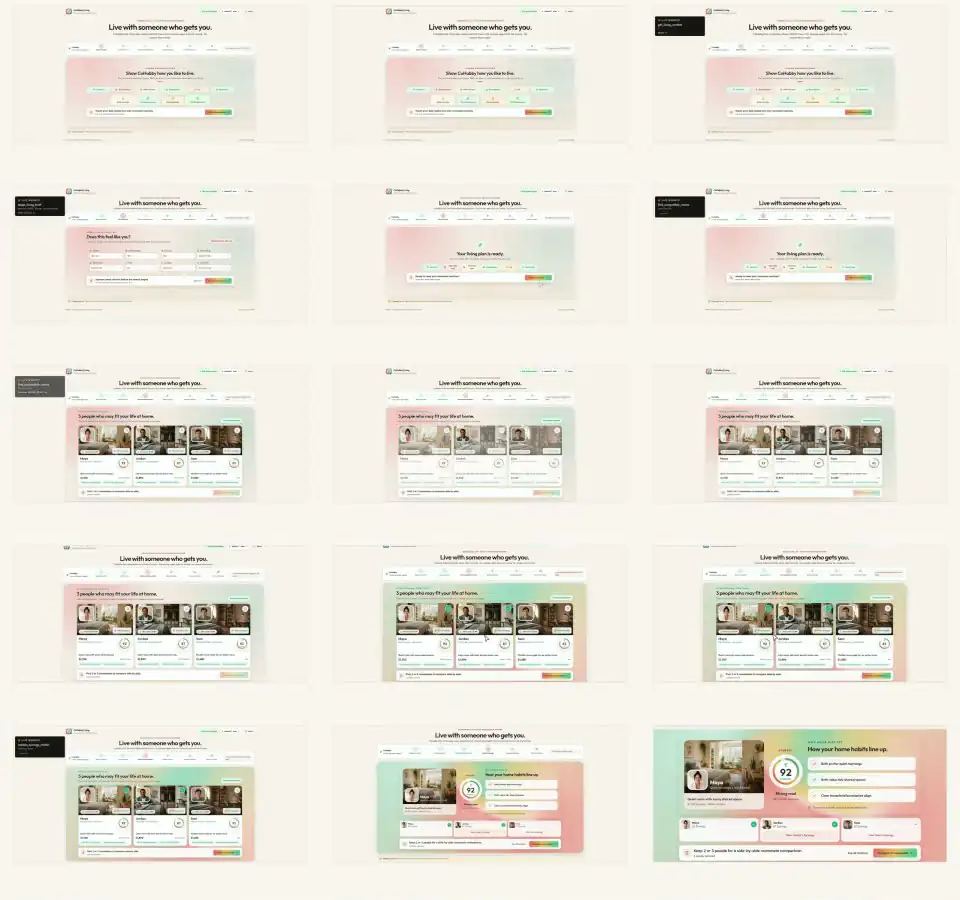
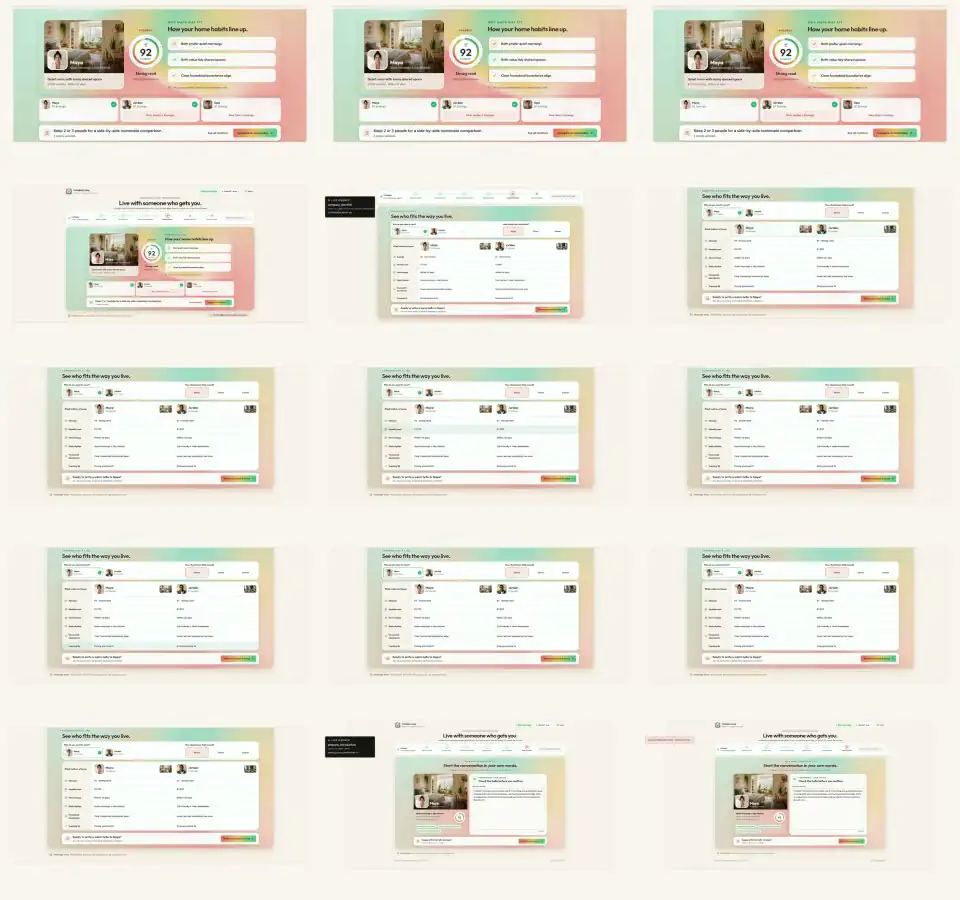
Frames show onboarding, preference questions, candidate cards, comparison, and a 92 synergy result.
Execution
8 /10
The packet shows a broad, coherent onboarding-to-match flow with compatibility explanations and a carefully bounded introduction workflow; backend reality is not independently verified.
Evidence cited
Frames cover onboarding, profiles, matching, comparison, score, and strong-match summary.
About text gives concrete state versions, deployed revision, and no-send confirmation behavior.
Impact
8 /10
Finding a livable roommate is a real, consequential need for many groups, and compatibility explanations address a gap beyond simple room listings.
Evidence cited
Packet names concrete audiences including nurses, single parents, graduates, retirees, and interns.
Product centers household fit and explainable reasons rather than superficial listing search.
Creativity
7 /10
Compatibility-first roommate matching with agent-staged but human-owned introductions is a thoughtful angle, though the matching category is familiar.
Evidence cited
Synergy Lens and human-edited first hello add depth.
Approval is deliberately not exposed as an agent tool.
03 Review highlights
Standouts across reviewers
Excellent safety and agency boundary: no tool can confirm or send a message.
Strong human-boundary design: agent stages, person decides and sends.
Explainable 92-score comparison is visually compelling.
Red flags
The underlying company/product is described as existing, though the challenge build is claimed to be a separate new codebase.
Packet claims live product users but does not independently verify adoption.
Frames are collages and exact privacy/matching behavior is not inspectable.
04 Evidence
What each artifact proves is labeled on the artifact itself. A Devpost page capture is packaging evidence, not proof the product runs;
video frames are evidence from the submitted demo, not live verification.
Contact sheets from the ?s video the team submitted. This is what reviewers were shown;
it demonstrates the product in motion but is not independent verification.
· watch the original
EX-V1 Sheet 1 of 3 · reported video evidenceEX-V2 Sheet 2 of 3 · reported video evidenceEX-V3 Sheet 3 of 3 · reported video evidence