Origin, access model, eligibility, and substitution are reviewer diagnostics, not judging criteria. Authentication requirements are not penalized.
02 The two blind reviews
Two independent reviewers scored this project blind, from a sanitized evidence packet.
Scores are shown separately so the reasoning stays inspectable. A withheld score means the reviewers differed by more than two points.
Reviewer A (round 1)
confidence 62%
Leverage
6 /10
Agents can manipulate many structured presentation and writing settings in shared state, but much of the outcome is achievable through UI controls or browser automation; WebMCP is meaningful rather than indispensable.
Evidence cited
44 tools expose schemas and live execution in-page.
Agent can reshape density, measure, type scale, surfaces, palettes, and drafts.
Publishing composer exposes structured fields to agents.
Execution
7 /10
The packet describes a broad, coherent prototype with numerous named surfaces and three frame sheets, but no transcript and no repository reduce certainty about completeness.
Evidence cited
Nine gallery images and three video frame sheets are listed.
Demo alive; project is presented as a prototype.
Named reading, personalization, voice, telemetry, composer, and profile surfaces.
Impact
7 /10
Readers and writers with strong accessibility or preference needs can benefit from adaptive presentation and agent-assisted publishing, though the problem is less acute than core workflow submissions.
Evidence cited
Targets reader/writer customization and distraction-free reading.
Supports layout, type, color, and drafting preferences.
Creativity
8 /10
Treating the interface itself as agent-reconfigurable, including reading modes and personalization telemetry, is a fresh synthesis pursued across many surfaces.
Evidence cited
Adaptive desk and voice guide connect spoken intent to WebMCP actions.
Warm-paper reading mode and OLED mode are part of a configurable product state.
Reviewer B (round 2)
confidence 70%
Leverage
6 /10
Agent-controlled personalization and structured publishing state are useful shared capabilities, but many outcomes could be reached through UI automation with moderate friction.
Evidence cited
About text describes 44 tools for layout, colors, drafts, and publishing.
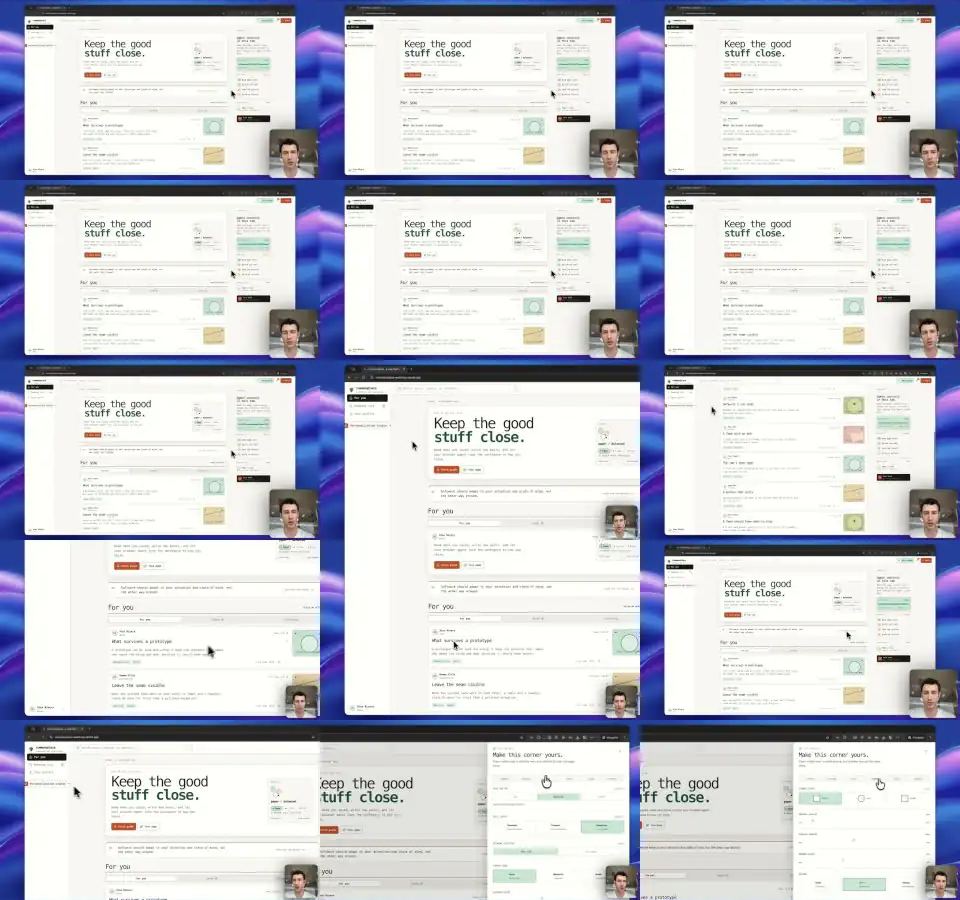
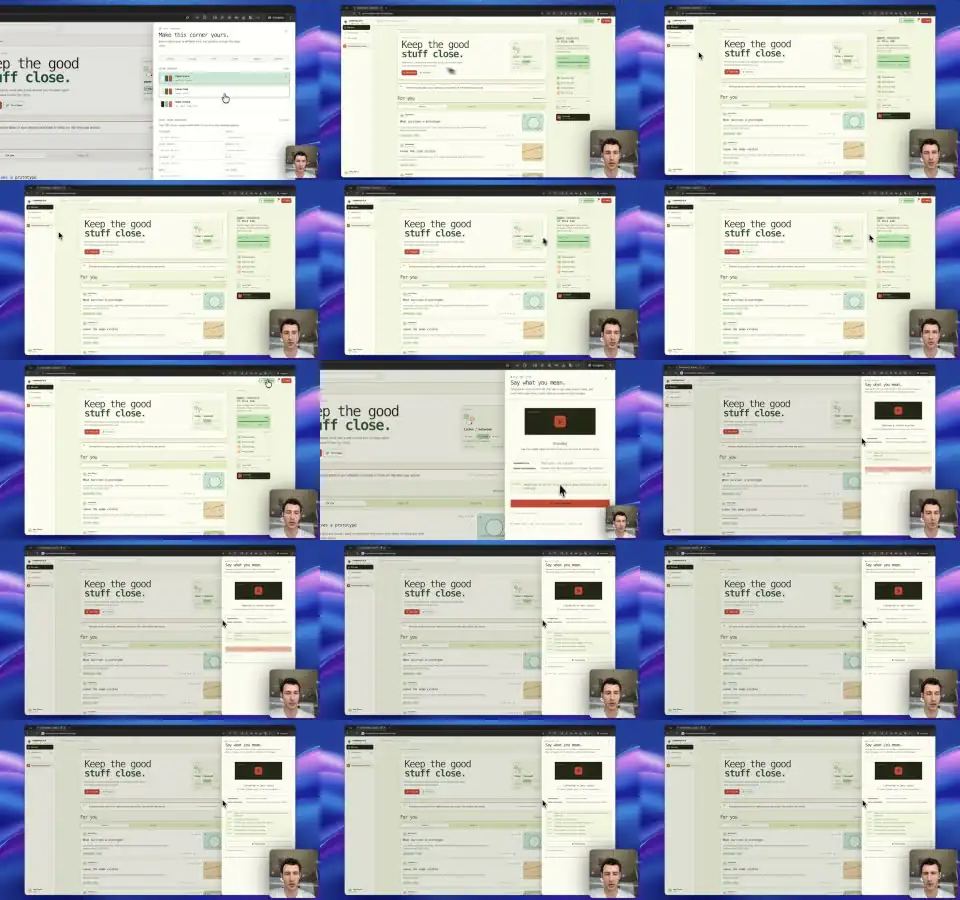
Frames show multiple themed reading/dashboard/composer states and an inspector/telemetry presentation.
No direct readable tool-call trace is visible.
Execution
7 /10
The many surfaces are visually coherent and appear implemented, though the packet is a prototype with no public repo and no direct end-to-end agent trace.
Evidence cited
Nine gallery images are reported; frame sheet shows OLED feed, personalization, reading, desk, and composer surfaces.
About text gives concrete feature inventory across modes.
Impact
7 /10
Writers and readers who want adaptive, distraction-free interfaces have a credible niche use case, even if the need is preference-driven.
Evidence cited
Pitch targets personalization of reading/writing experience.
Visible product includes reading mode, publishing composer, and theme/layout controls.
Creativity
8 /10
Treating the web interface itself as agent-reshapable, including voice intent and adaptive reading surfaces, is a fresh and memorable interaction direction.
Evidence cited
Multiple live modes—night desk, warm paper reading, personalization studio, and inspector—pursue adaptation deeply.
Agent reshaping layout/colors/drafts is more than ordinary content generation.
03 Review highlights
Standouts across reviewers
Agent-controlled presentation layer.
Large in-page tool inspector and multiple reading modes.
Ambitious adaptive reading/writing environment with distinctive visual modes.
Red flags
No public repository.
Broad prototype scope may leave depth/completeness uncertain.
No public repository; project origin and live tool behavior cannot be independently checked from packet.
04 Evidence
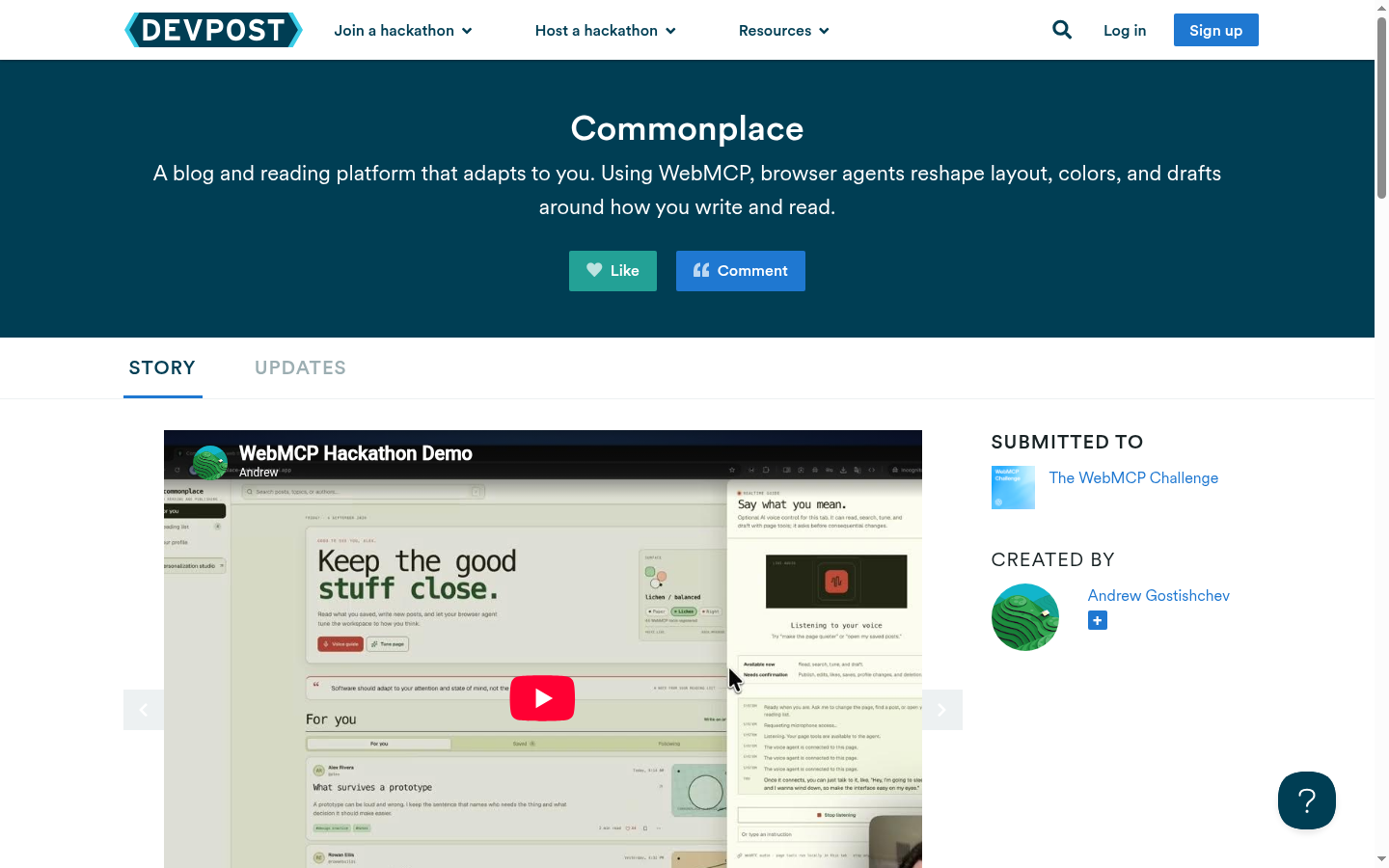
What each artifact proves is labeled on the artifact itself. A Devpost page capture is packaging evidence, not proof the product runs;
video frames are evidence from the submitted demo, not live verification.
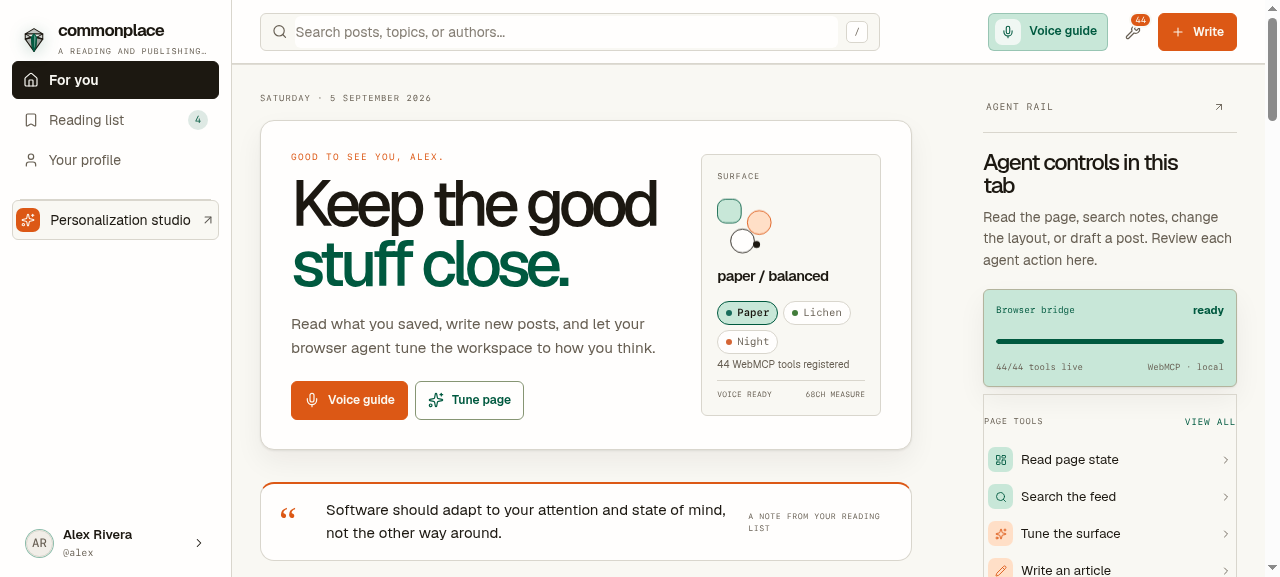
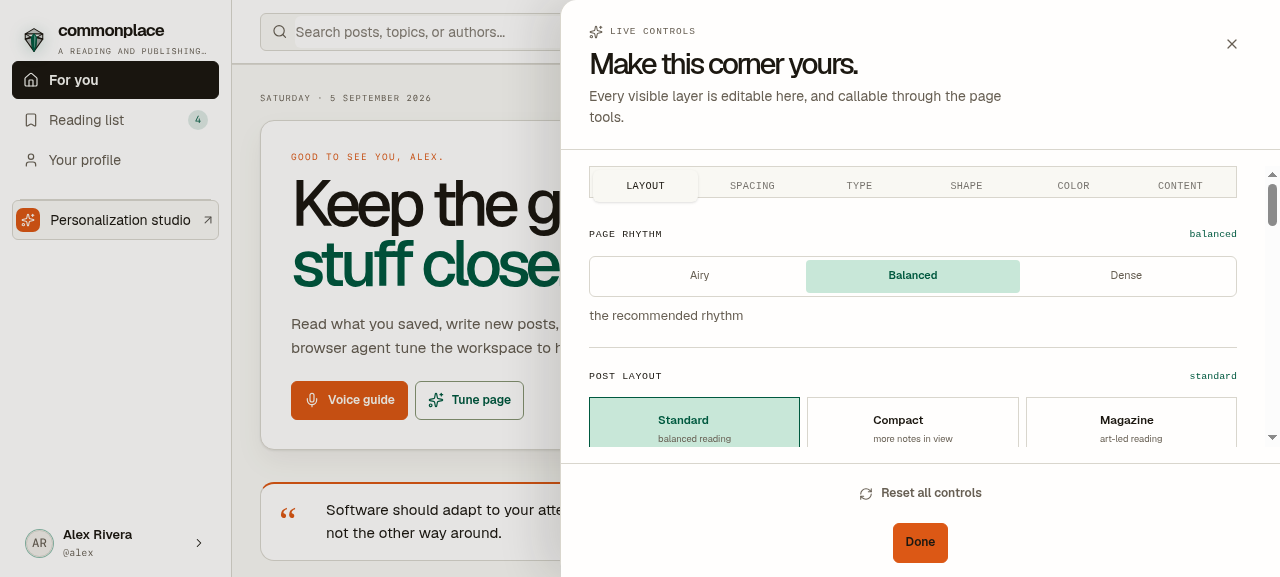
Probe captures come from Stage 2 interactive testing of the live product by a reviewer.
EX-01 Devpost page capture · packaging evidence, not runtime proof
· sourceEX-02 Live probe at Stage 2 · observed product behavior, reviewer-drivenEX-03 Live probe after interaction · observed product behavior
EX-V Submitted demo video
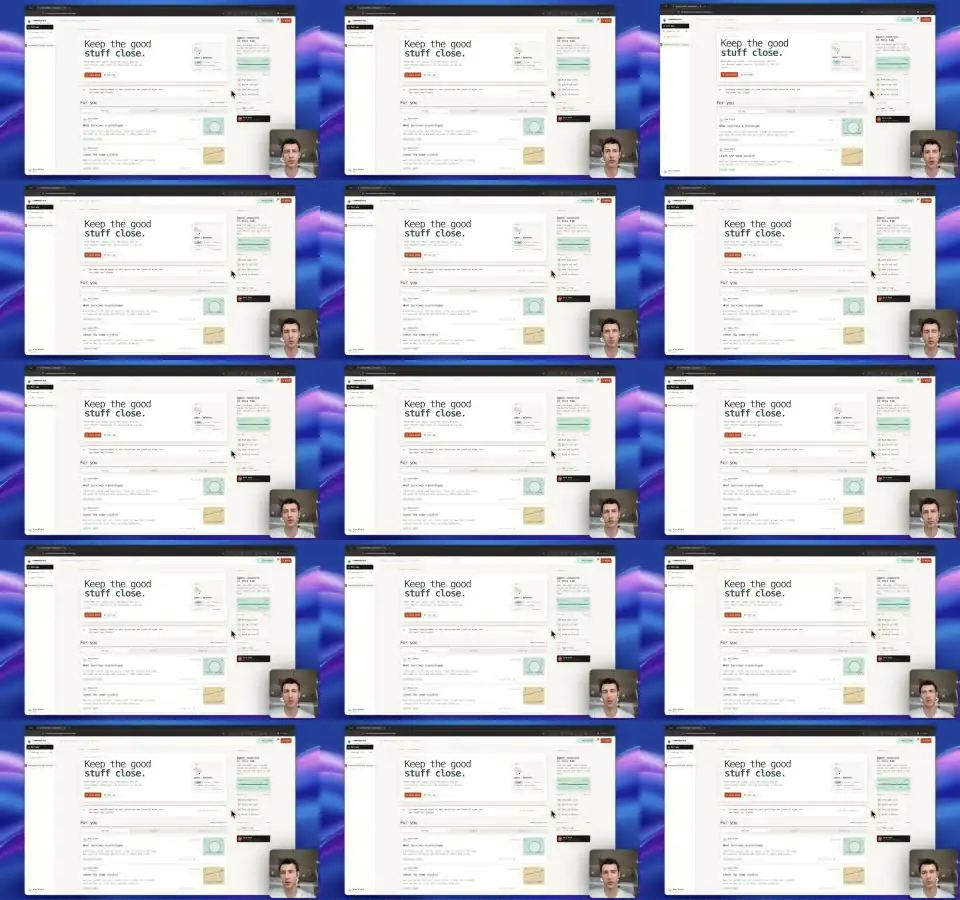
Contact sheets from the ?s video the team submitted. This is what reviewers were shown;
it demonstrates the product in motion but is not independent verification.
· watch the original
EX-V1 Sheet 1 of 3 · reported video evidenceEX-V2 Sheet 2 of 3 · reported video evidenceEX-V3 Sheet 3 of 3 · reported video evidence