Origin, access model, eligibility, and substitution are reviewer diagnostics, not judging criteria. Authentication requirements are not penalized.
02 The two blind reviews
Two independent reviewers scored this project blind, from a sanitized evidence packet.
Scores are shown separately so the reasoning stays inspectable. A withheld score means the reviewers differed by more than two points.
Reviewer A (round 1)
confidence 72%
Leverage
8 /10
WebMCP lets the agent manipulate synchronized musical transport and lesson state directly, turning advice into an immediately playable setup rather than instructions to recreate manually.
Evidence cited
Description enumerates tempo, transposition, slicing, looping, count-in, hand mix, highlighting, and practice controls.
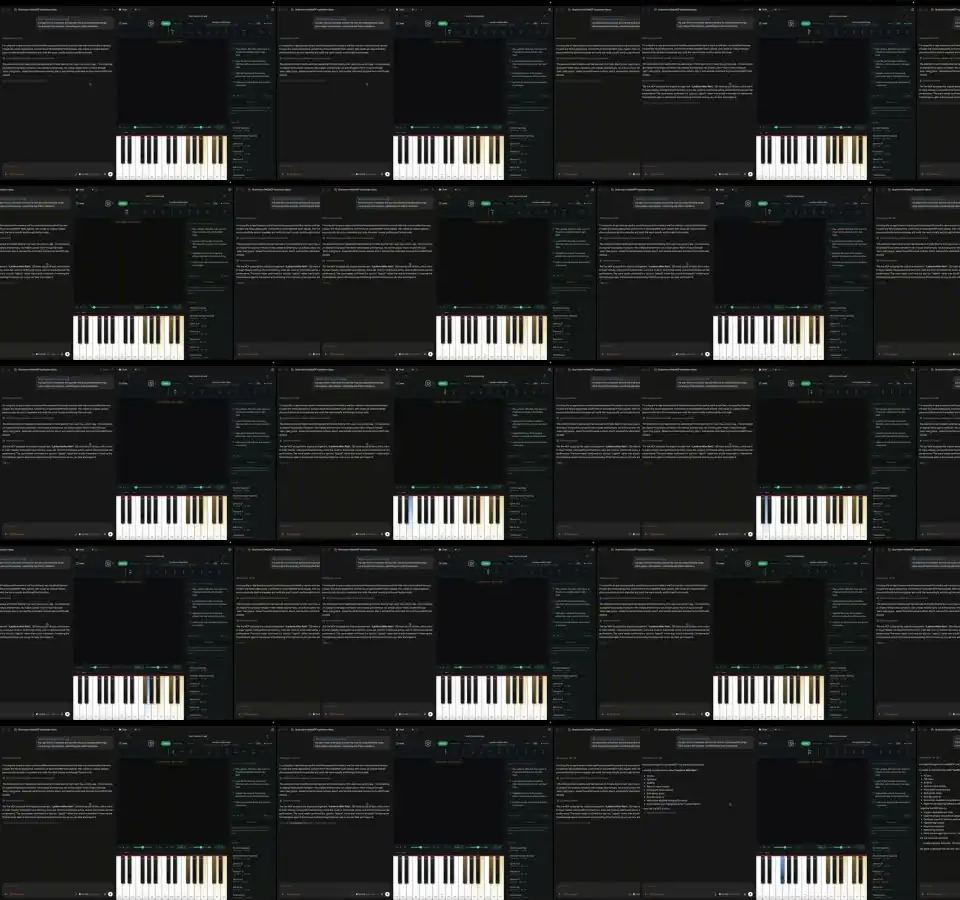
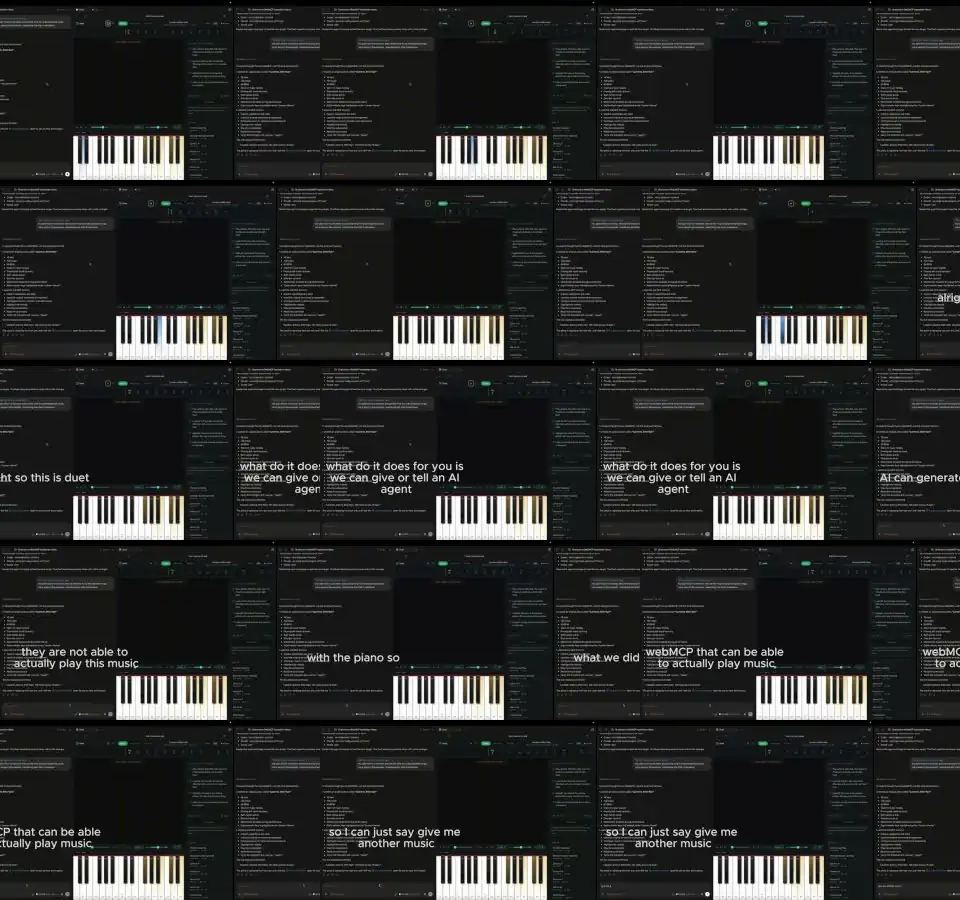
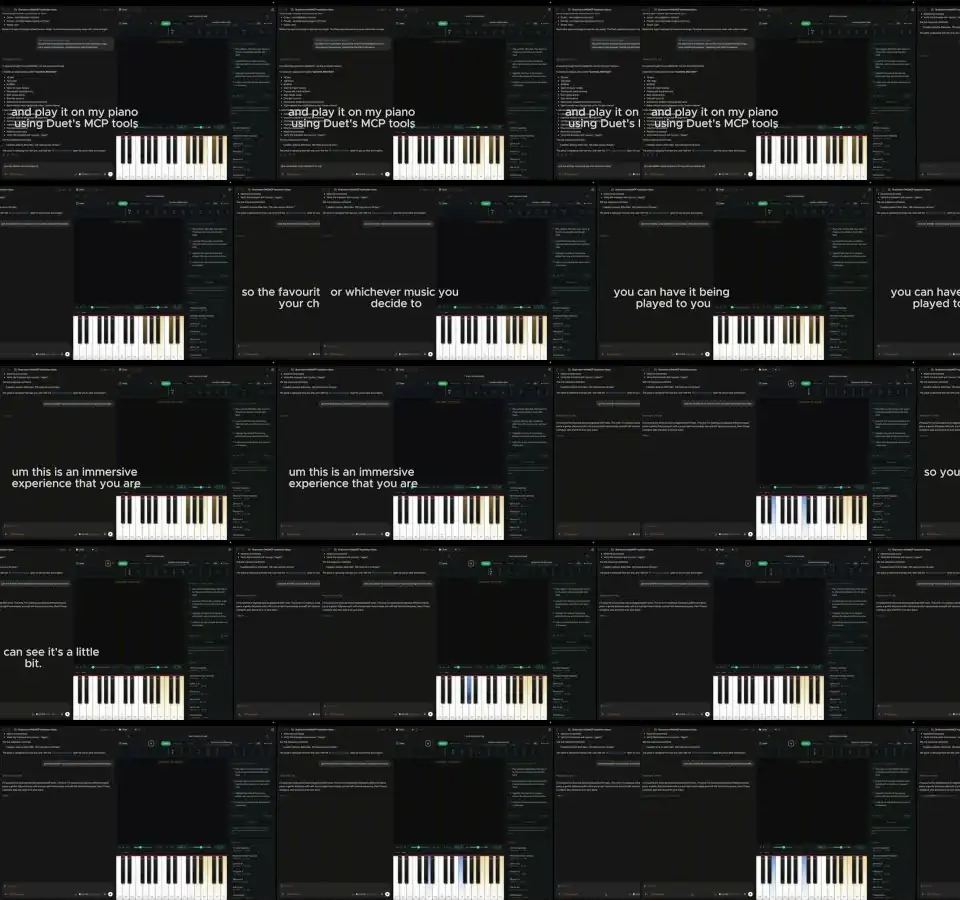
Frame sheets show browser piano/lesson UI states.
Execution
7 /10
The packet describes a broad coherent piano studio and frames show the product, but no transcript or clearly legible end-to-end interaction sequence is supplied.
Evidence cited
Fourteen pieces, multiple modes, responsive piano, and shared activity history are claimed.
Frames visibly show piano lesson interface and changing lesson controls.
Impact
8 /10
Learners benefit directly from converting a vague practice request into a configured, playable lesson; the niche educational value is credible.
Evidence cited
Specific learner request maps to visible practice settings.
Includes expected-note practice, hand isolation, looping, and tempo control.
Creativity
8 /10
The shared-instrument interaction model is a fresh synthesis: agent and learner operate the same piano and lesson state in real time.
Evidence cited
Agent meets learner inside the instrument rather than stopping at chat advice.
Combines structured musical arrangements with visible practice state.
Reviewer B (round 2)
confidence 75%
Leverage
8 /10
WebMCP converts natural-language pedagogical intent into coordinated instrument state—transport, hand mix, loop, highlights, and practice mode—rather than returning advice the learner must rebuild manually.
Evidence cited
Description contrasts useful chat advice with inability to reach the piano.
Example request contains multiple coordinated actions and states.
Frames visibly show piano/lesson product imagery, though not tool calls.
Execution
8 /10
The packet describes a focused and complete lesson workflow with 14 pieces, modes, controls, history, and microphone capture; visible product presentation supports coherence but not full operation.
Evidence cited
Feature list covers transport, slicing, count-in, metronome, highlights, and expected-note practice.
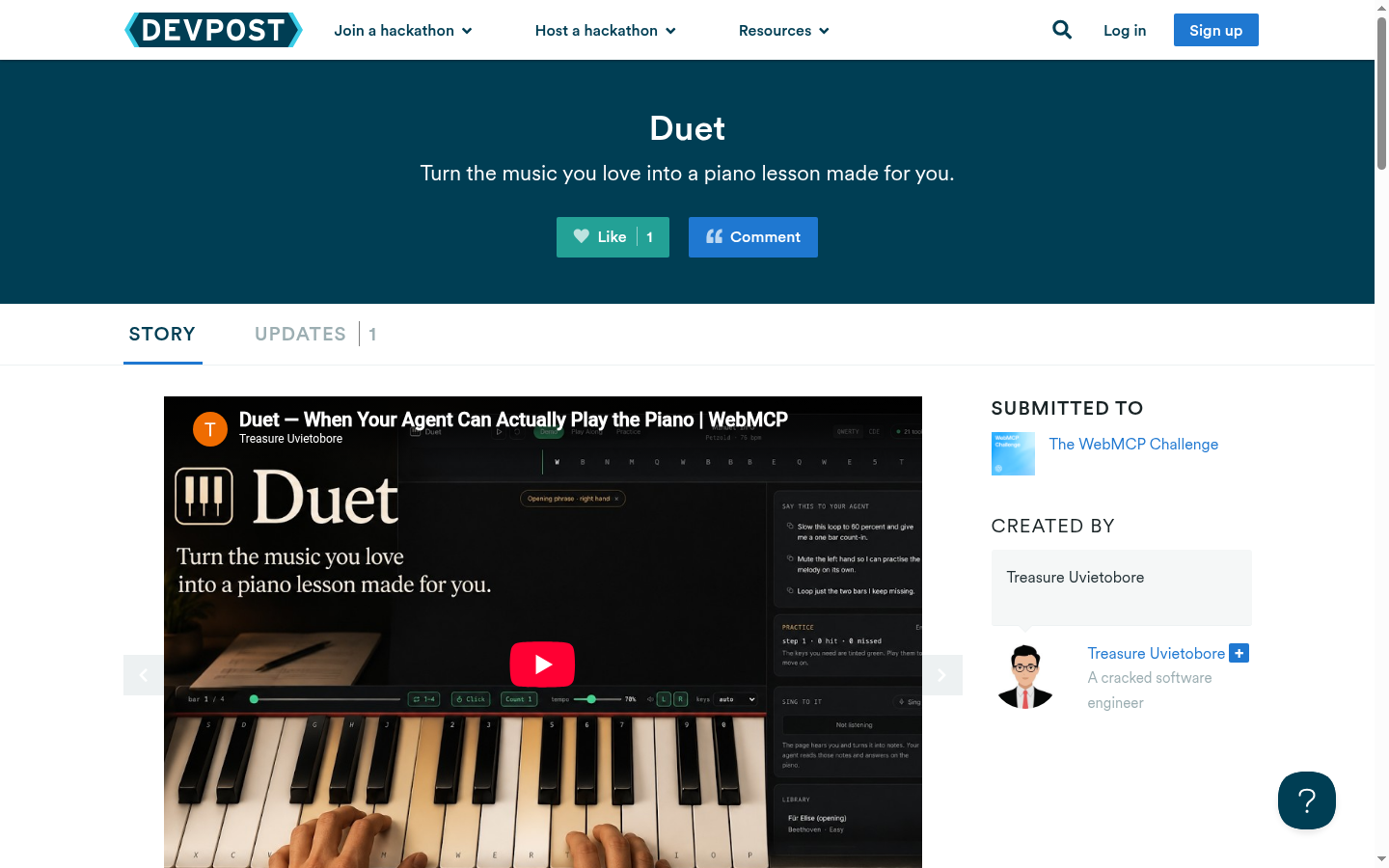
Devpost screenshot visibly presents a piano lesson interface.
Description states the requested lesson becomes immediately playable.
Impact
8 /10
Piano learners have a clear problem—turning advice into structured practice—and the product delivers a concrete, immediate lesson rather than abstract instructions.
Evidence cited
Audience need is explicitly grounded in practice tasks such as right-hand isolation and bars 1–4 looping.
Includes mouse, touch, and keyboard play plus public-domain pieces.
Creativity
8 /10
The agent meeting the learner inside a playable instrument is a fresh interaction model, with musical arrangements and practice state treated as first-class shared state.
Evidence cited
Natural-language multi-action lesson request maps to visible piano state.
Strong human-agent shared state around a real instrument-like interface.
Strong translation from lesson intent to playable state.
Good fit between agent coordination and instrument controls.
Red flags
No transcript and no clearly readable agent invocation/result in the contact sheets.
No submitted video; agent-to-piano interaction is claimed rather than directly shown.
04 Evidence
What each artifact proves is labeled on the artifact itself. A Devpost page capture is packaging evidence, not proof the product runs;
video frames are evidence from the submitted demo, not live verification.
Contact sheets from the ?s video the team submitted. This is what reviewers were shown;
it demonstrates the product in motion but is not independent verification.
· watch the original
EX-V1 Sheet 1 of 3 · reported video evidenceEX-V2 Sheet 2 of 3 · reported video evidenceEX-V3 Sheet 3 of 3 · reported video evidence