One city. One hospital. One chance. GRIDFALL turns WebMCP into a real-time crisis room where a human and an AI agent diagnose cascading failures and restore ICU power together.
Aggregate37
Leverage10
Execution8
Impact9
Creativity10
Each criterion 1–10, equally weighted; aggregate is their sum. Ranking is the pipeline's consolidated output.
Origin, access model, eligibility, and substitution are reviewer diagnostics, not judging criteria. Authentication requirements are not penalized.
02 The two blind reviews
Two independent reviewers scored this project blind, from a sanitized evidence packet.
Scores are shown separately so the reasoning stays inspectable. A withheld score means the reviewers differed by more than two points.
Reviewer A (round 1)
confidence 76%
Leverage
9 /10
Structured live state, dependency-aware operations, and an explicit human authorization checkpoint create a collaboration general UI automation cannot safely replicate.
Evidence cited
Agent inspects city state and proposes operations with benefit, time cost, and systemic risk
Challenge mode prevents state change until human approval
Execution
8 /10
The mission loop, dependency model, and authorization state form a coherent, intentional simulation; some end-to-end details remain claimed rather than observed.
Evidence cited
About text specifies 100 validated incident configurations
Central objective and countdown are clearly defined
Three frame sheets and screenshot are listed
Impact
8 /10
As a training and decision-support simulation, it offers credible value for learning safe human-agent collaboration in high-stakes systems.
Evidence cited
Hospital ICU power objective creates understandable consequential stakes
Focus on human accountability and systemic risk
Creativity
9 /10
The crisis-room interaction model is novel, memorable, and pursues WebMCP's safety affordances deeply.
Evidence cited
Cascading multi-system city simulation
Agent proposes while human remains responsible for authorization
Reviewer B (round 2)
confidence 72%
Leverage
8 /10
Structured live simulation state and human-authorized operation proposals are more reliable than pixel inference, though a general agent could potentially operate a similar game with significant friction.
Evidence cited
About text describes inspect-live-state, hospital checks, operation review, and Challenge mode approval.
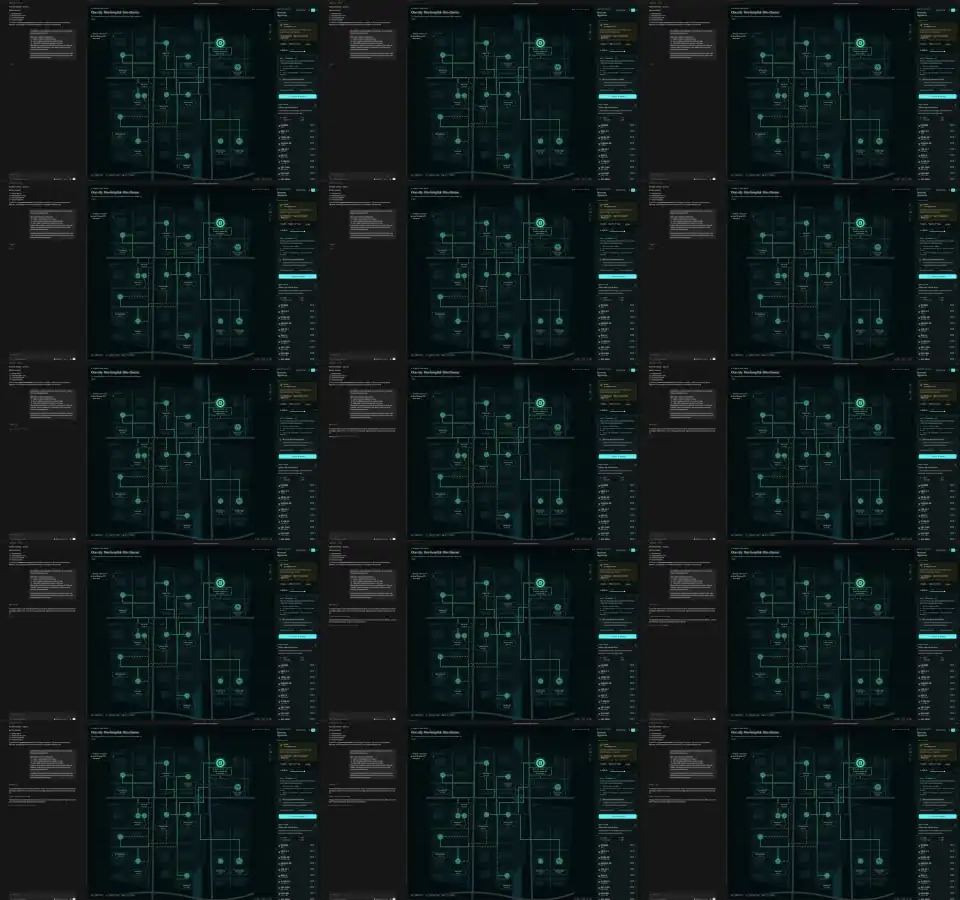
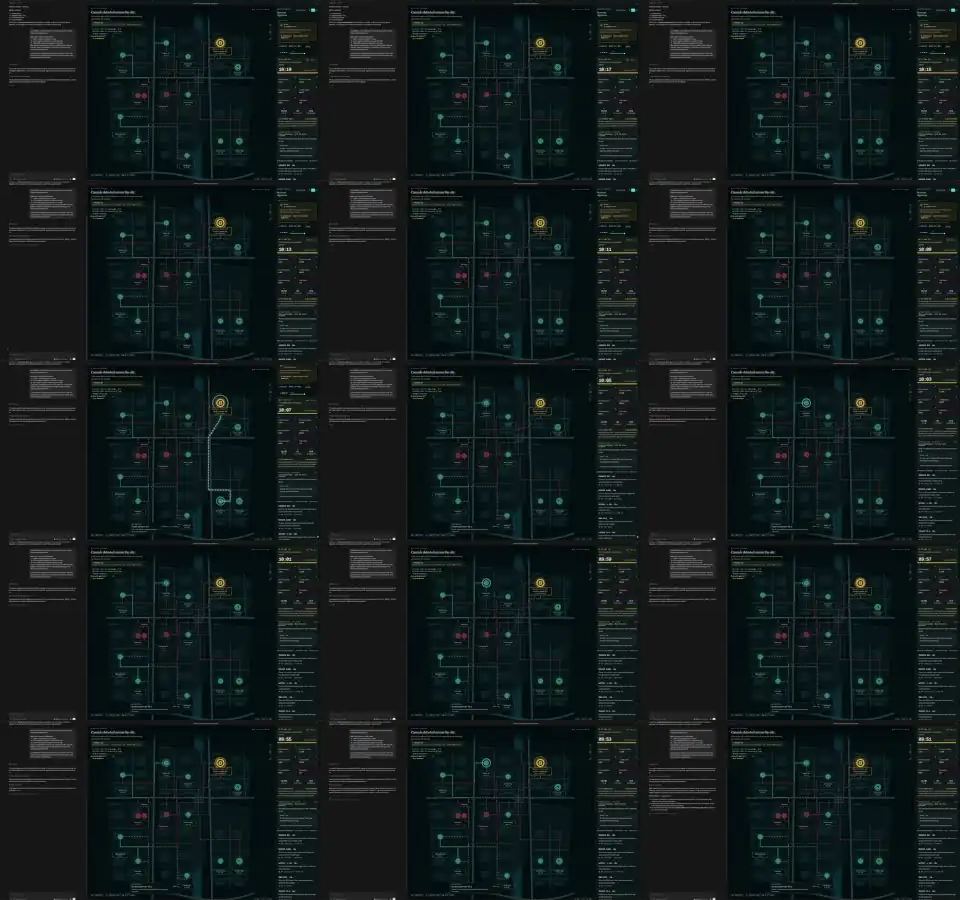
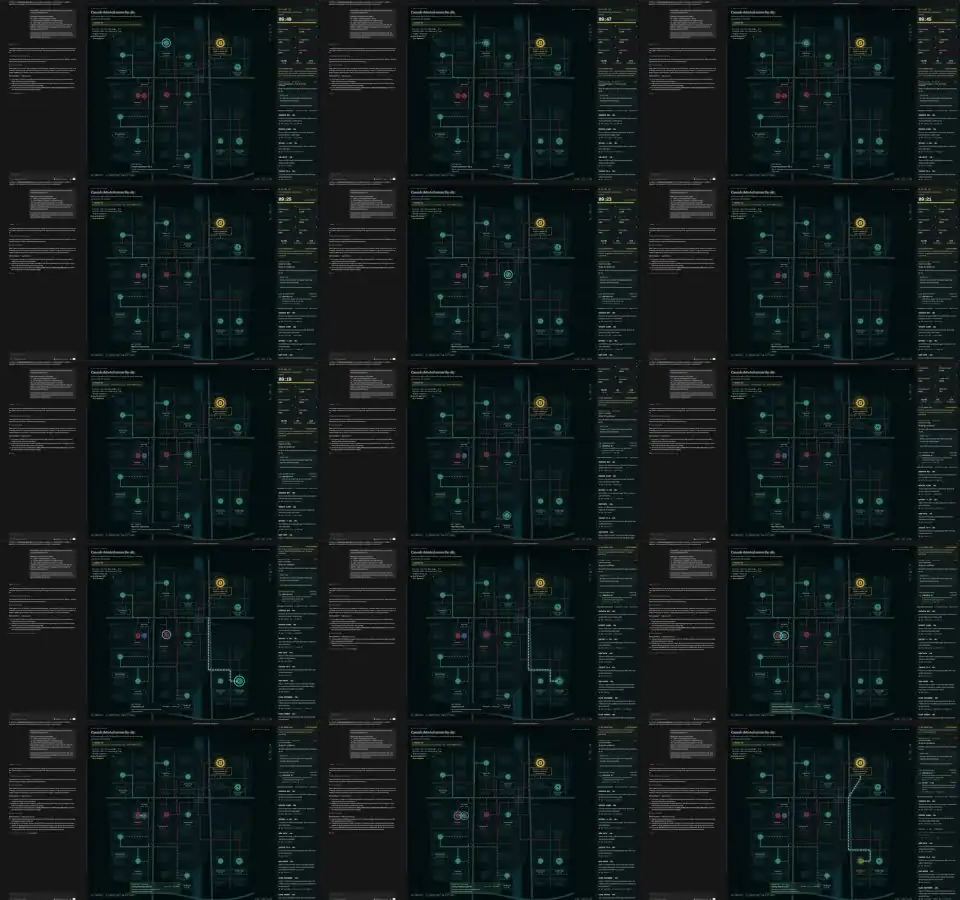
Frames show a network/map simulation with changing markers, route overlays, and status panels.
The project centers WebMCP on safe proposals rather than autonomous action.
Execution
7 /10
The packet shows a loaded, visually coherent crisis simulation and apparent route/state changes, but no readable tool trace or explicit completed ICU restoration is shown.
Evidence cited
Frames show repeated tactical map states, highlighted target, routes, and telemetry panels.
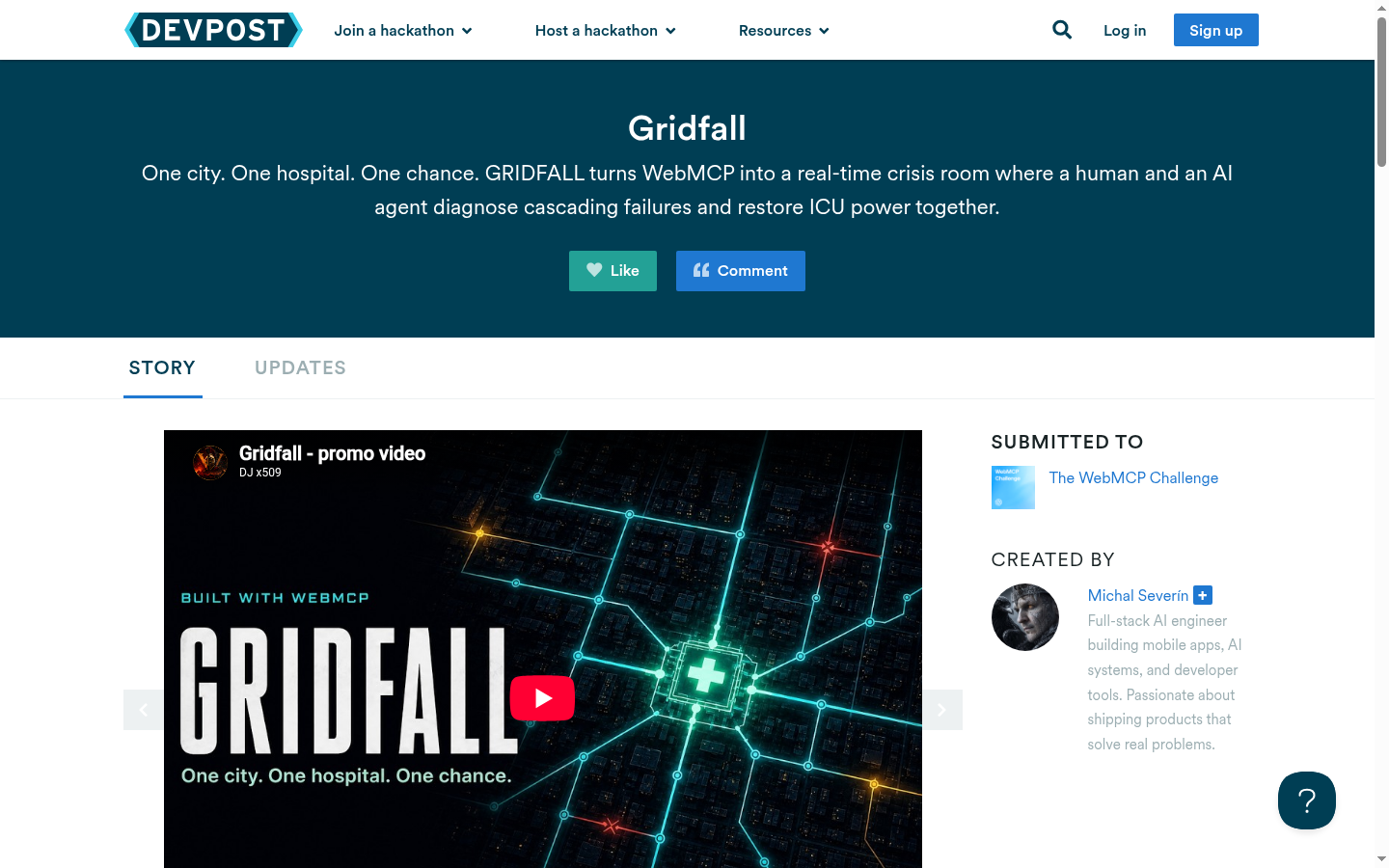
Devpost screenshot shows a polished branded product concept but only a paused promotional thumbnail.
About text claims 100 validated configurations and approval flow without end-to-end frame proof.
Impact
8 /10
The simulation offers credible learning and decision-support value around cascading infrastructure failures and consequential human oversight.
Evidence cited
Pitch identifies diagnosis of interconnected power, hospital, data, water, transport, and emergency systems.
The visible map communicates a concrete crisis objective and systemic dependencies.
Creativity
8 /10
A real-time crisis room and infrastructure dependency simulation is an ambitious, memorable use of a game-like environment for human-agent reasoning.
Evidence cited
Concept turns WebMCP into a collaborative emergency operations model.
The map links multiple infrastructure domains and makes time/risk part of the interaction.
03 Review highlights
Standouts across reviewers
Excellent human-in-the-loop safety model
WebMCP is central to the game mechanic
Strong systems-thinking simulation concept.
Human authorization is integrated into the game’s consequential operations.
Red flags
Simulation value depends on depth and correctness of hidden incident configurations
No readable direct tool-call evidence in the frame sheets.
No clear success/completion state is visible.
04 Evidence
What each artifact proves is labeled on the artifact itself. A Devpost page capture is packaging evidence, not proof the product runs;
video frames are evidence from the submitted demo, not live verification.
Contact sheets from the ?s video the team submitted. This is what reviewers were shown;
it demonstrates the product in motion but is not independent verification.
· watch the original
EX-V1 Sheet 1 of 3 · reported video evidenceEX-V2 Sheet 2 of 3 · reported video evidenceEX-V3 Sheet 3 of 3 · reported video evidence