An instrument for the US benefits system. Earn one more dollar at the wrong income and a family can lose thousands in benefits at once. Peira simplifies this complexity one step at a time.
Aggregate36.5
Leverage9
Execution9
Impact9.5
Creativity9
Each criterion 1–10, equally weighted; aggregate is their sum. Ranking is the pipeline's consolidated output.
Origin, access model, eligibility, and substitution are reviewer diagnostics, not judging criteria. Authentication requirements are not penalized.
02 The two blind reviews
Two independent reviewers scored this project blind, from a sanitized evidence packet.
Scores are shown separately so the reasoning stays inspectable. A withheld score means the reviewers differed by more than two points.
Reviewer A (round 1)
confidence 82%
Leverage
9 /10
A person cannot practically operate the large rules engine directly, while structured probes let an agent perform precise causal and counterfactual analysis beside the shared chart and log.
Evidence cited
Description says the person cannot drive a 600MB rules engine.
The packet describes a deep, coherent analysis workflow and includes three frame sheets, though no transcript and no live observation limit certainty.
Evidence cited
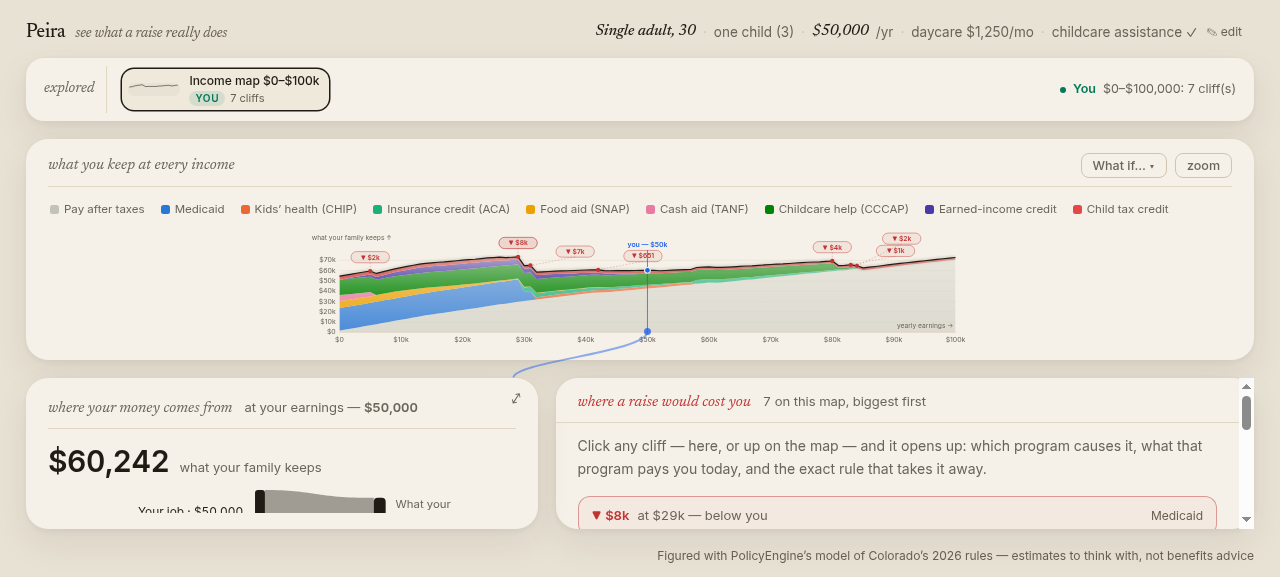
About text covers household input, map, causal probes, counterfactual overlays, and healed cliffs.
Gallery/frame evidence was submitted.
Impact
10 /10
Benefits cliffs are a real, high-stakes problem for families and policymakers; explaining causes and testing legal changes could provide substantial practical and policy value.
Evidence cited
Pitch identifies families losing thousands from small income changes.
Product maps what a Colorado family keeps and identifies responsible programs/rules.
Creativity
9 /10
Applying mechanistic-interpretability-style probes to the benefits system is an original and ambitious interaction model with meaningful depth.
Evidence cited
Knockout, tracing, and minimal-intervention probes are first-class user operations.
On-screen cliff healing makes policy counterfactuals tangible.
Reviewer B (round 2)
confidence 76%
Leverage
9 /10
WebMCP lets an agent operate a complex rules engine through structured probes while a person edits assumptions and interprets the shared visual map; generic UI driving would be far less reliable for this stateful analysis.
Description emphasizes the person/agent shared log and agent access to a 600MB rules engine.
Execution
8 /10
The scope is ambitious but internally coherent, and the packet includes a live demo plus three frame sheets; without reliable image inspection, detailed end-to-end claims remain partly claimed.
Evidence cited
demo_alive=alive; three frame sheets and three gallery images submitted.
About text describes maps, household editing, counterfactuals, and policy interventions as one workflow.
Impact
9 /10
Families navigating benefits and policymakers studying cliffs have a consequential, specific need; the product directly supports understanding and policy experimentation.
Evidence cited
Pitch identifies benefit cliffs where small income changes can cost thousands.
Claims Colorado household mapping, rule attribution, and policy counterfactuals.
Creativity
9 /10
Applying mechanistic-interpretability-style probes to the opaque benefits system is unusually original, with an ambitious interaction model pursued deeply.
Evidence cited
Concept explicitly transfers knockout/trace/intervention probes to benefits policy.
Supports both personal household exploration and policy-maker what-if analysis.
03 Review highlights
Standouts across reviewers
High-stakes real-world use case
Novel probe-based interaction
Actionable counterfactual analysis
Exceptional problem specificity and social value.
Probe-based interaction is memorable and conceptually coherent.
Red flags
Complexity and factual correctness of benefits rules are not independently verified in this packet.
Image service prevented full frame inspection.
04 Evidence
What each artifact proves is labeled on the artifact itself. A Devpost page capture is packaging evidence, not proof the product runs;
video frames are evidence from the submitted demo, not live verification.
Probe captures come from Stage 2 interactive testing of the live product by a reviewer.
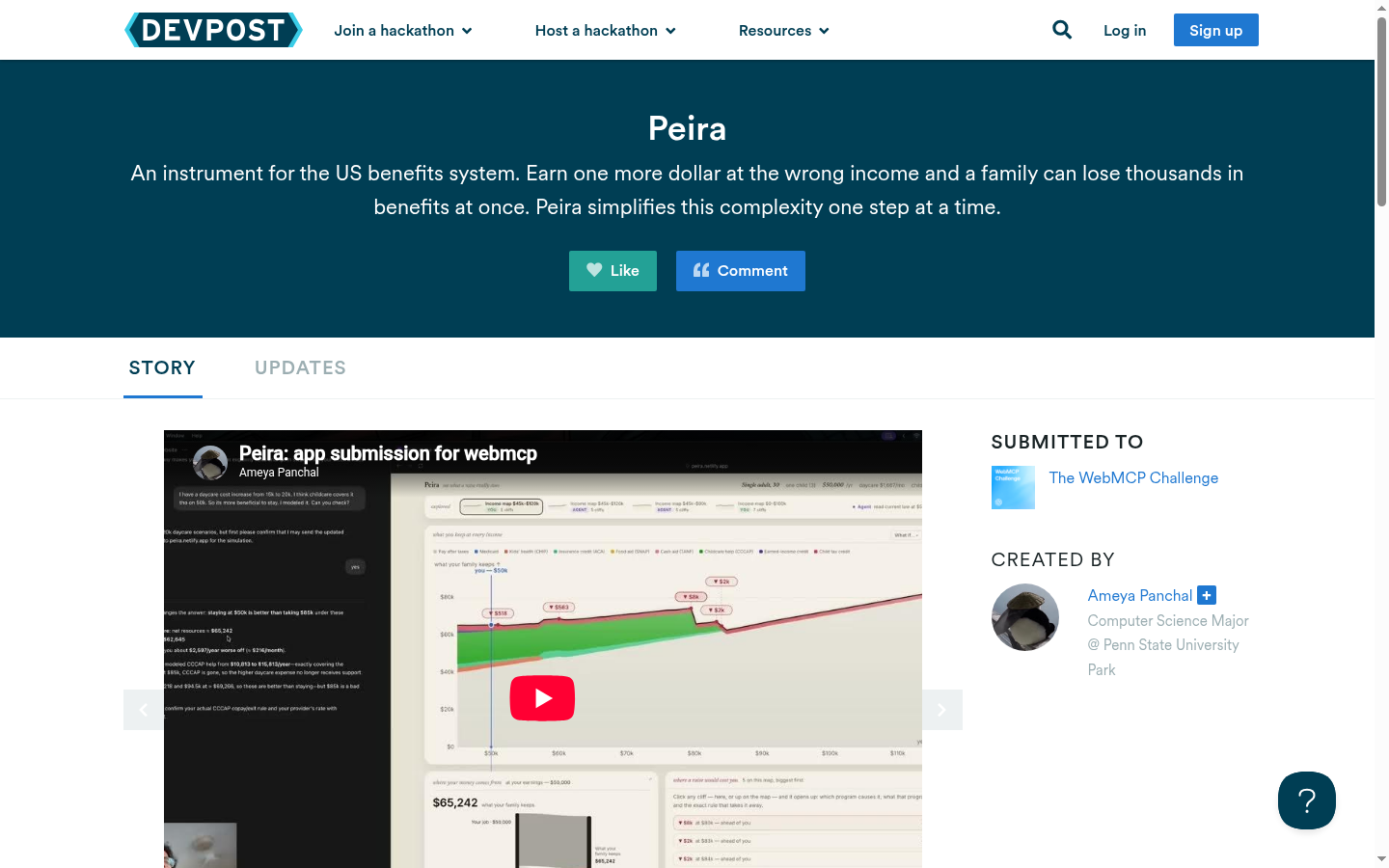
EX-01 Devpost page capture · packaging evidence, not runtime proof
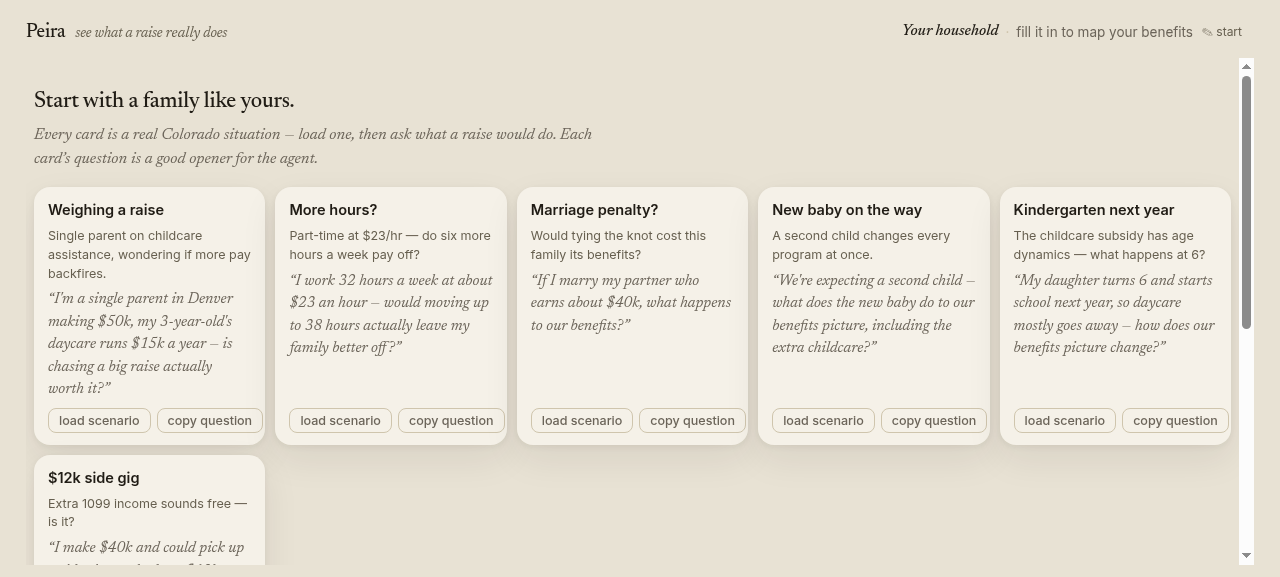
· sourceEX-02 Live probe at Stage 2 · observed product behavior, reviewer-drivenEX-03 Live probe after interaction · observed product behavior
EX-V Submitted demo video
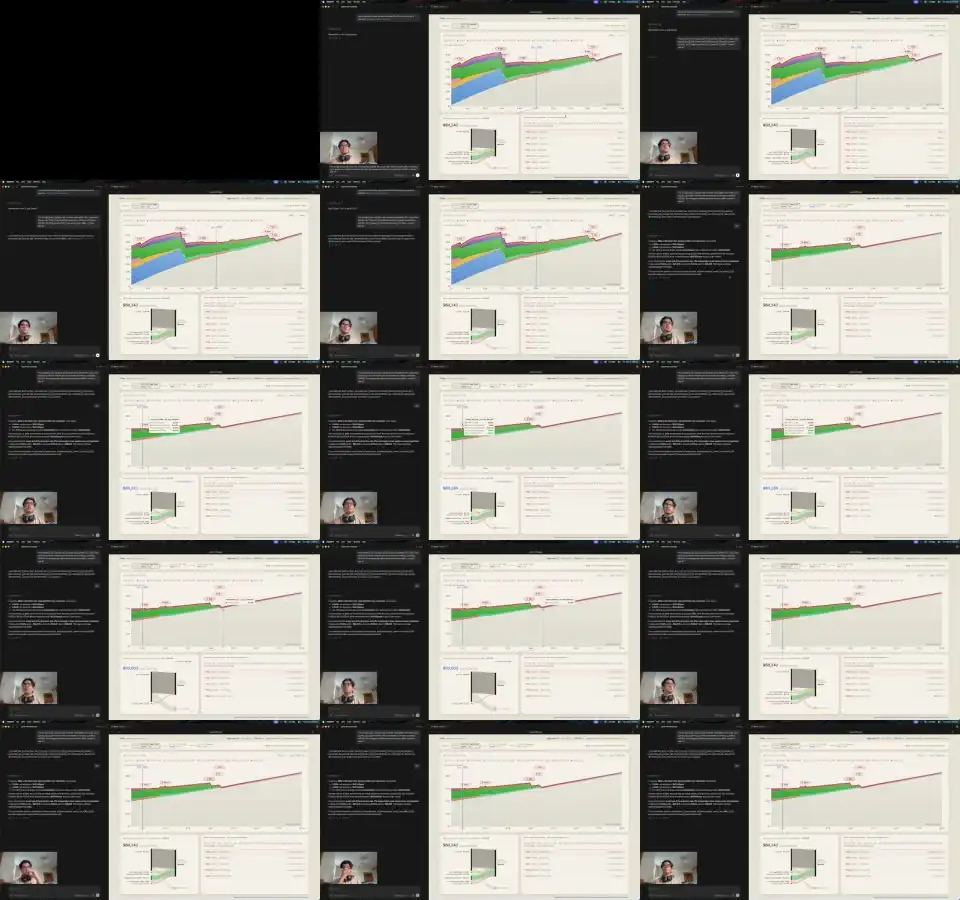
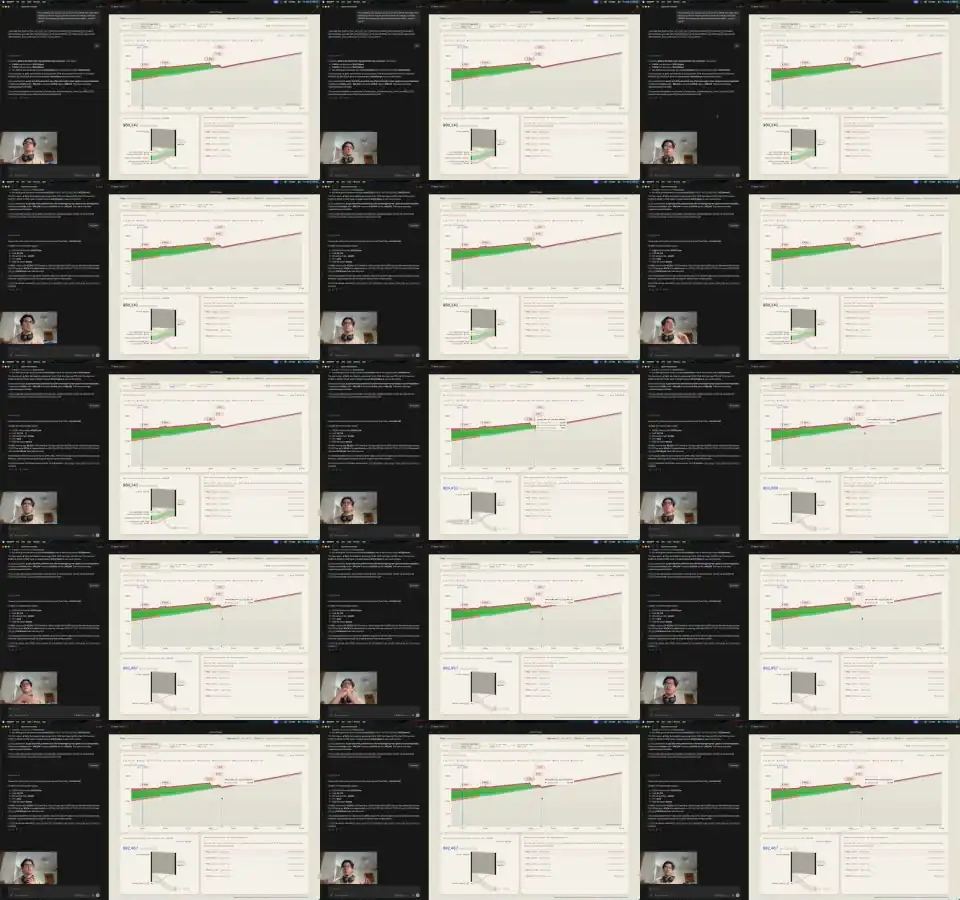
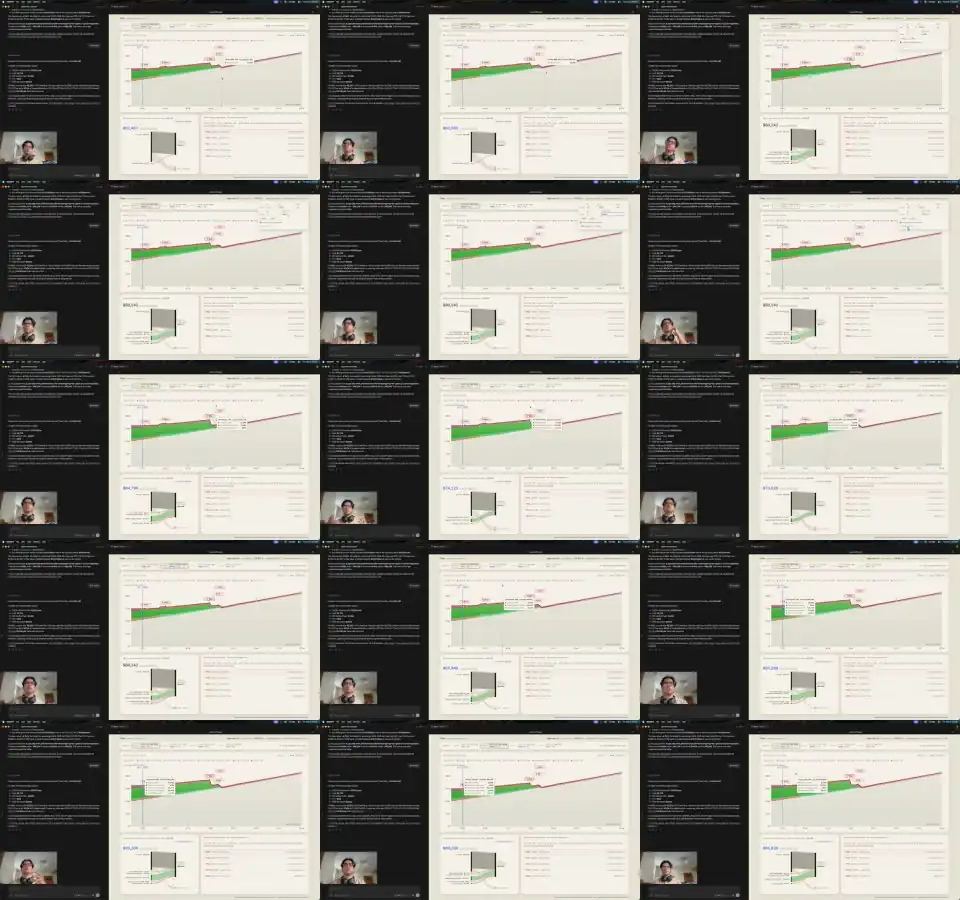
Contact sheets from the ?s video the team submitted. This is what reviewers were shown;
it demonstrates the product in motion but is not independent verification.
· watch the original
EX-V1 Sheet 1 of 3 · reported video evidenceEX-V2 Sheet 2 of 3 · reported video evidenceEX-V3 Sheet 3 of 3 · reported video evidence