Origin, access model, eligibility, and substitution are reviewer diagnostics, not judging criteria. Authentication requirements are not penalized.
02 The two blind reviews
Two independent reviewers scored this project blind, from a sanitized evidence packet.
Scores are shown separately so the reasoning stays inspectable. A withheld score means the reviewers differed by more than two points.
Reviewer A (round 1)
confidence 86%
Leverage
8 /10
WebMCP exposes live semantic state—hypotheses, provenance, certainty, locked geometry, and human changes—that screenshots or generic UI driving cannot reliably preserve for an agent.
Evidence cited
About text explicitly contrasts semantic live state with what a screenshot can show.
Claims 18–19 lifecycle-aware structured Site Tools and deterministic checks.
Execution
8 /10
The domain model, repeatable scenarios, transparent calculations, exports, and visual demo form a coherent substantial product; some details remain claimed because no transcript is provided.
Evidence cited
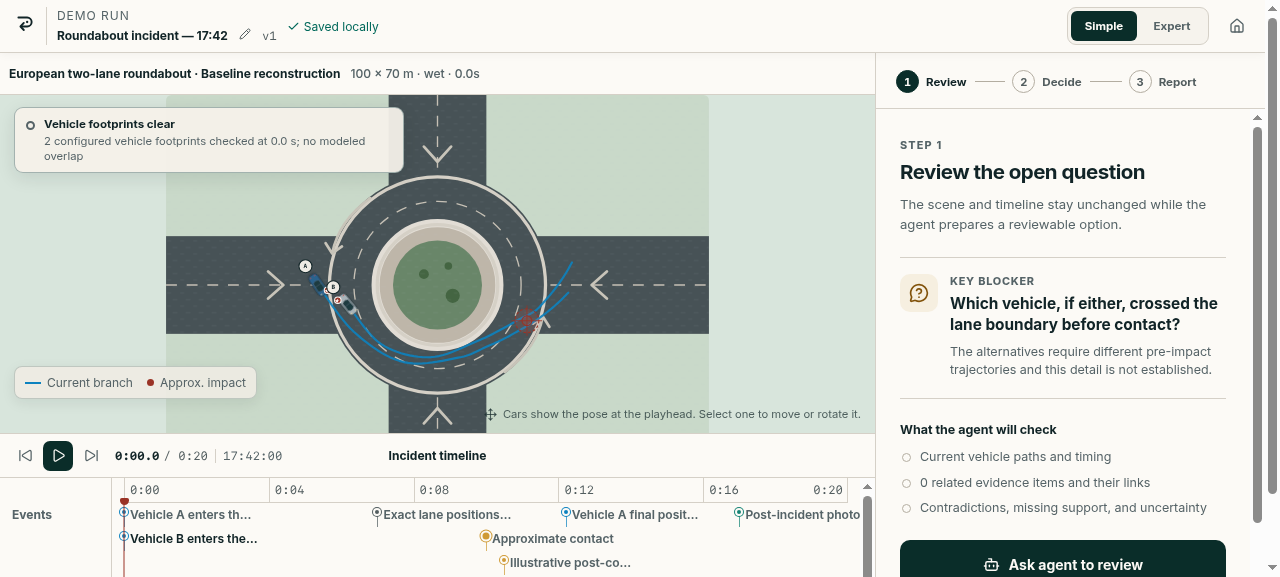
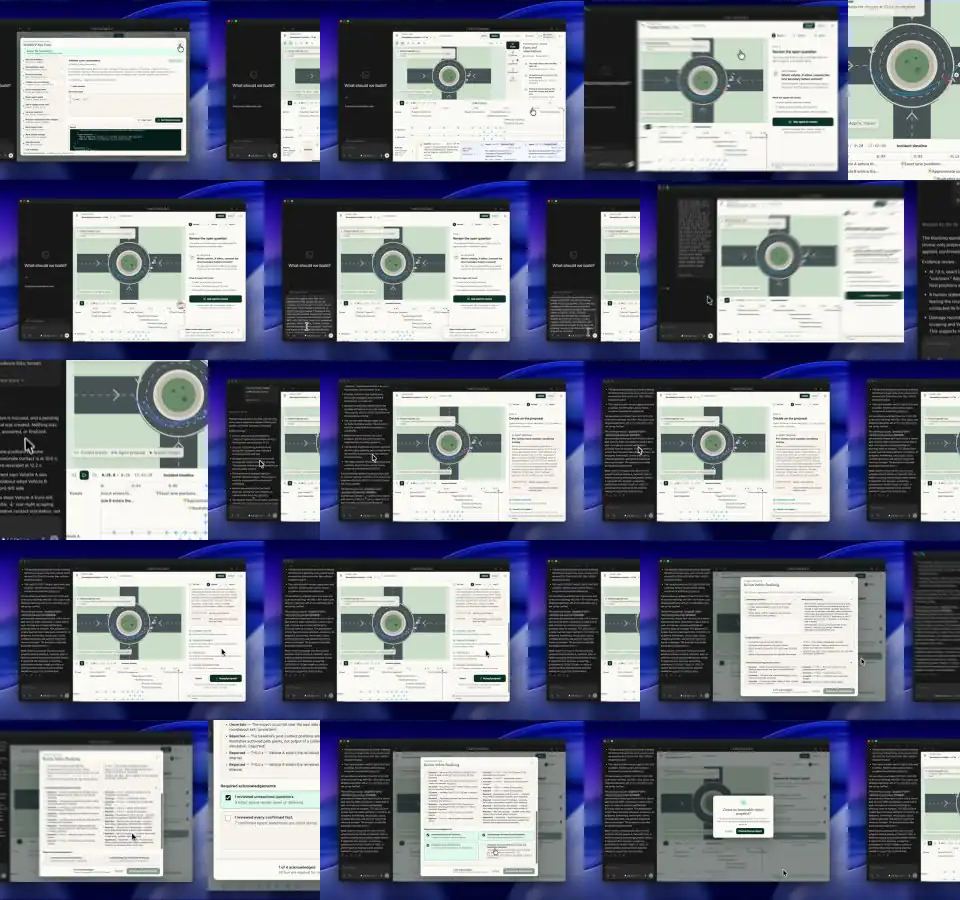
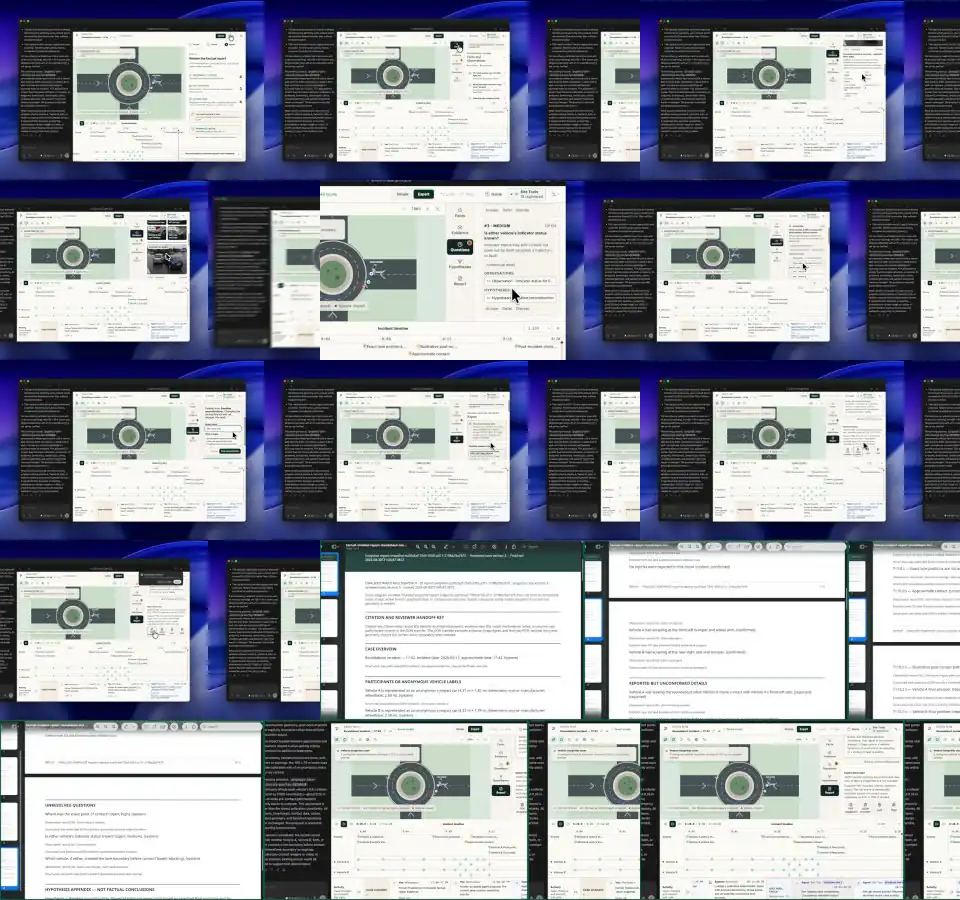
Frames visibly show a calibrated road/roundabout, labeled vehicles, colored trajectories, and a timeline.
About text lists JSON/SVG/PNG/citation-bound PDF exports and four synthetic scenarios.
Impact
8 /10
Minor incidents commonly lack a black box and involve conflicting memories; a provenance-preserving review aid has credible value for drivers, insurers, or mediators without claiming forensic truth.
Evidence cited
Specific problem of scattered photos, damage, positions, timing, and conflicting memories.
Explicitly distinguishes evidence, memory, uncertainty, dispute, and inference.
Creativity
9 /10
The evidence-bound, uncertainty-preserving reconstruction model is unusually thoughtful and memorable, with a rich visual and semantic interaction model.
Evidence cited
Alternative hypotheses and explicit provenance/certainty are first-class objects.
Calibrated trajectories plus deterministic geometry/motion checks avoid pretending to be a truth detector.
Reviewer B (round 2)
confidence 87%
Leverage
9 /10
The core value depends on exposing semantic structured state—hypotheses, provenance, certainty, geometry, locks, and unresolved questions—to an agent; a screenshot-driving agent could not reliably maintain this model.
Evidence cited
About text explicitly contrasts WebMCP semantic access with screenshots and describes 18–19 structured tools.
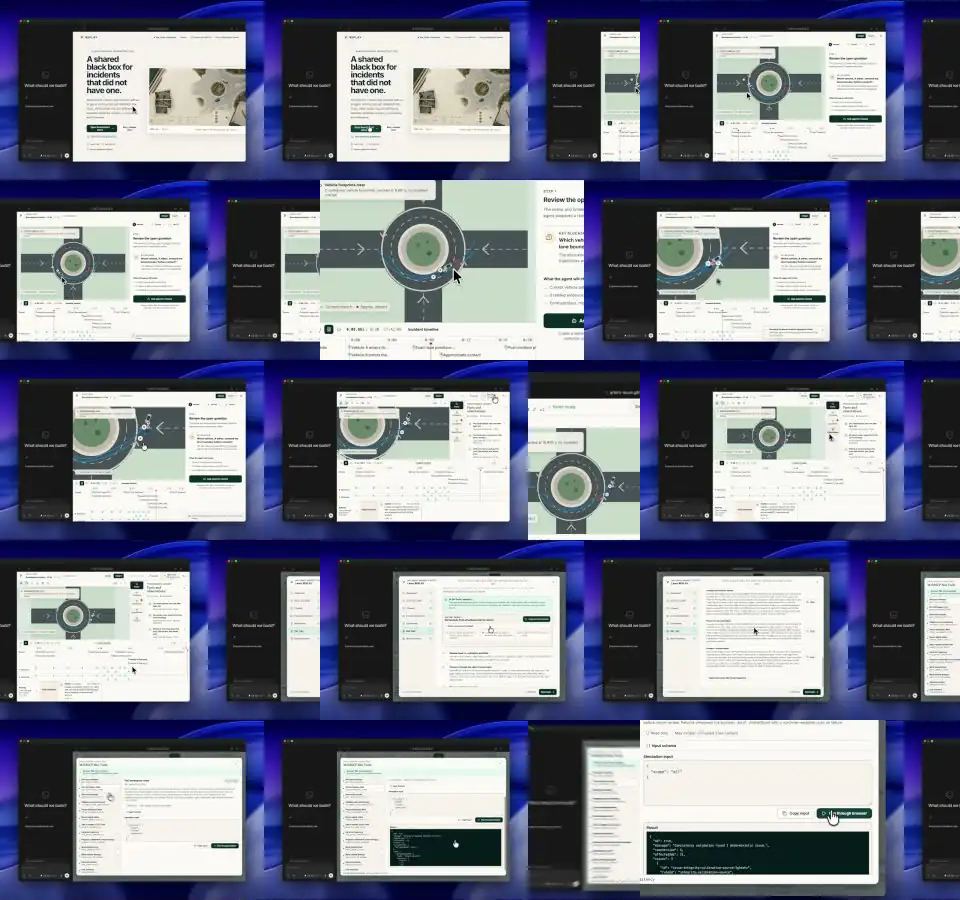
Frame sheets show incident geometry, annotations, questions, and structured review/output states.
Execution
8 /10
The packet shows a coherent, unusually complete investigation workspace and multiple repeatable scenarios, though end-to-end behavior is claimed rather than observed in a transcript.
Evidence cited
Frame sheets show calibrated road scenes, vehicle paths, annotation/review forms, and structured outputs.
Description lists deterministic checks and JSON/SVG/PNG/PDF exports.
Impact
9 /10
There is a specific audience—people documenting minor no-injury crashes—with a real evidence and uncertainty problem, and the product directly addresses it without overclaiming forensic truth.
Evidence cited
Description identifies scattered photos, damage, timing, memories, and the risk of inference becoming fact.
Visible interface supports evidence annotation, hypothesis review, and report generation.
Creativity
9 /10
Evidence-bound collaborative reconstruction is a memorable interaction model, especially its deliberate separation of observation, memory, dispute, and inference.
Evidence cited
Pitch and screenshots visibly frame a shared road-incident reconstruction workspace.
About text describes alternative hypotheses, provenance, uncertainty, and transparent review aids.
03 Review highlights
Standouts across reviewers
Excellent uncertainty/provenance discipline.
WebMCP changes the agent's access to shared semantic investigation state.
Exceptional evidence/provenance discipline.
Clear refusal to act as a fault-assignment or truth-detector system.
Red flags
Complex forensic-adjacent scope requires careful communication to avoid overinterpretation.
Agent invocation details are mostly textual claims rather than readable in-frame logs.
No transcript or visible agent invocation is included in the packet.
Claims about deterministic calculations are not independently verifiable from the images.
04 Evidence
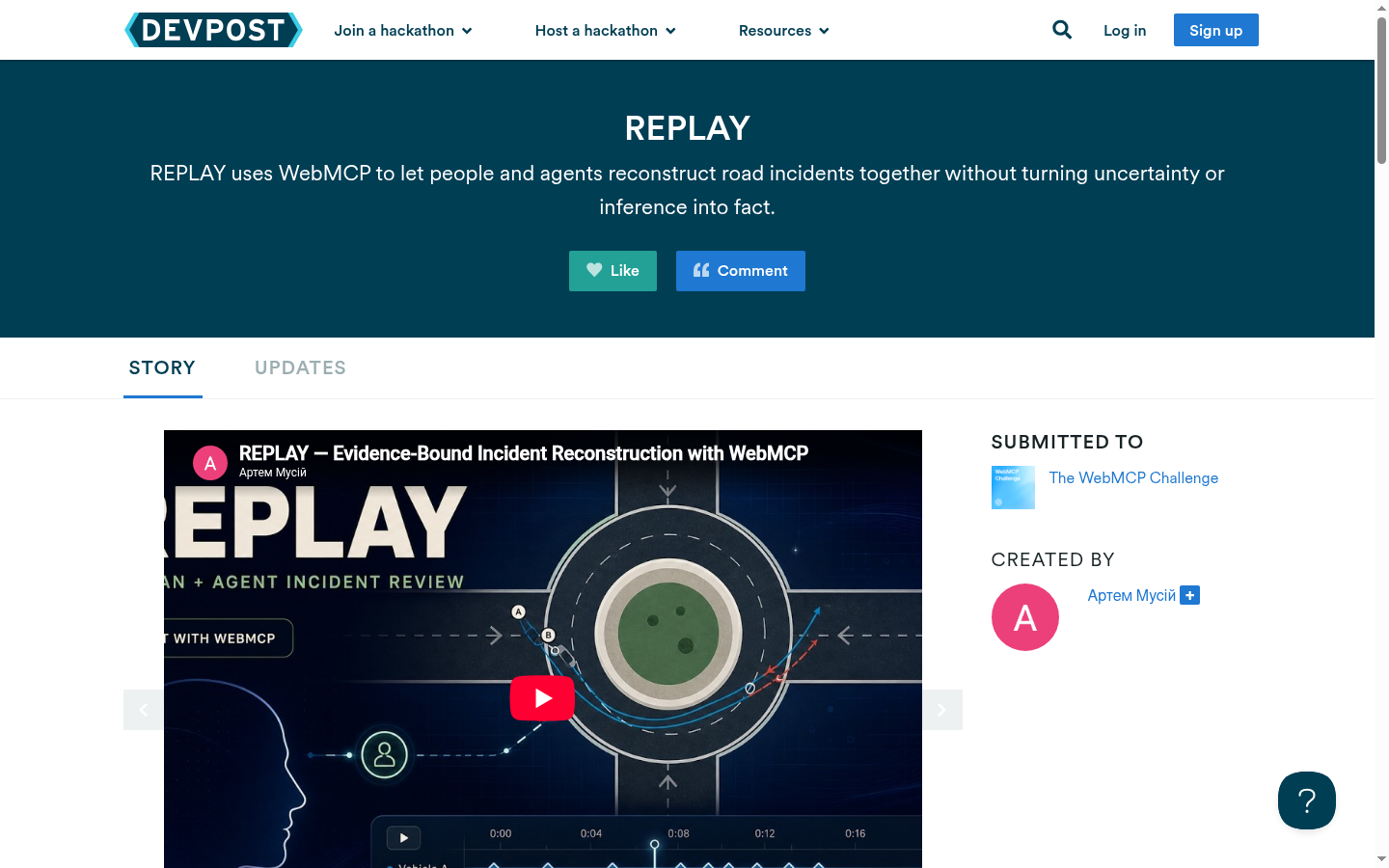
What each artifact proves is labeled on the artifact itself. A Devpost page capture is packaging evidence, not proof the product runs;
video frames are evidence from the submitted demo, not live verification.
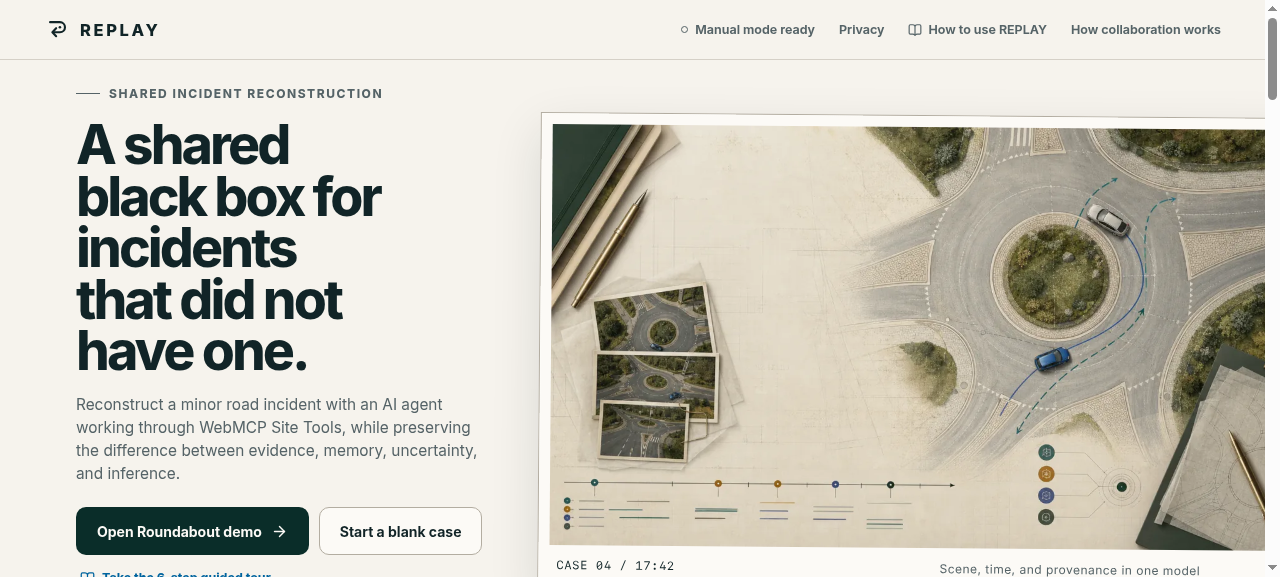
Probe captures come from Stage 2 interactive testing of the live product by a reviewer.
EX-01 Devpost page capture · packaging evidence, not runtime proof
· sourceEX-02 Live probe at Stage 2 · observed product behavior, reviewer-drivenEX-03 Live probe after interaction · observed product behavior
EX-V Submitted demo video
Contact sheets from the ?s video the team submitted. This is what reviewers were shown;
it demonstrates the product in motion but is not independent verification.
· watch the original
EX-V1 Sheet 1 of 3 · reported video evidenceEX-V2 Sheet 2 of 3 · reported video evidenceEX-V3 Sheet 3 of 3 · reported video evidence