Origin, access model, eligibility, and substitution are reviewer diagnostics, not judging criteria. Authentication requirements are not penalized.
02 The two blind reviews
Two independent reviewers scored this project blind, from a sanitized evidence packet.
Scores are shown separately so the reasoning stays inspectable. A withheld score means the reviewers differed by more than two points.
Reviewer A (round 1)
confidence 85%
Leverage
9 /10
Agents operate a structured live 3D scene, reason over geometry and clearance, and respond to human edits; this is far more reliable than screenshot-based browser driving for spatial tasks.
Evidence cited
Description says the agent reads live layout, moves real objects, measures gaps, and checks clearance inside the page.
Shared canvas and activity panel expose real calls; the agent can detect a manually introduced blocked door and fix it.
Execution
8 /10
The packet describes a complete interactive 3D workflow with furniture editing, scenario changes, route checking, and activity logging; frame sheets are listed, though no transcript is supplied.
Evidence cited
Demo sequence includes dinner-party rearrangement, wheelchair route checking, deliberate sofa obstruction, diagnosis, and fix.
Project claims a complete 3D planner with 18 always-available tools plus selected-object controls.
Impact
8 /10
Home planners and people considering accessibility have a concrete need to understand spatial arrangements and clearance before acting.
Deterministic clearance checks turn visual planning into actionable feedback.
Creativity
8 /10
Combining conversational agent collaboration with a manipulable 3D spatial scene and accessibility reasoning is memorable and ambitious.
Evidence cited
Agent uses room state rather than a screenshot and can react to human drag edits.
The same room supports manual, conversational, and mixed improvisational planning.
Reviewer B (round 2)
confidence 83%
Leverage
8 /10
An agent can inspect exact live spatial state, move objects, measure gaps, and check accessibility clearances; this is substantially more reliable than reasoning from screenshots.
Evidence cited
Description explicitly says the agent uses the room rather than a screenshot and exposes live layout and clearance semantics.
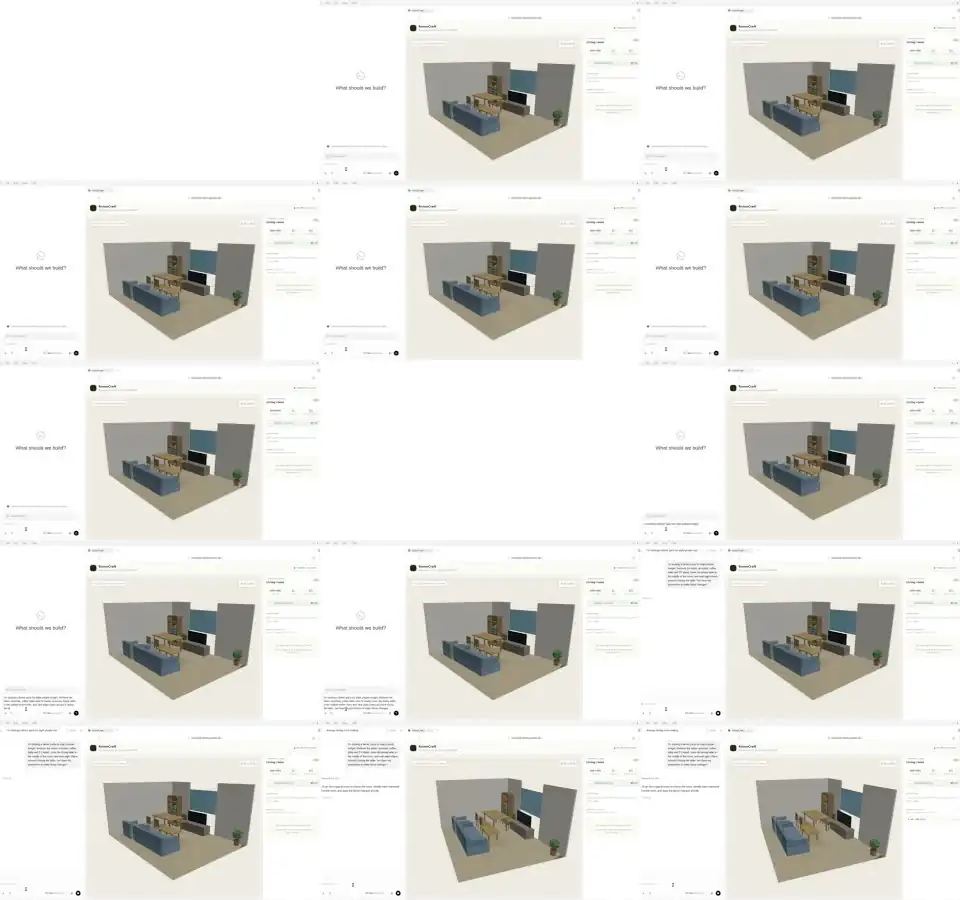
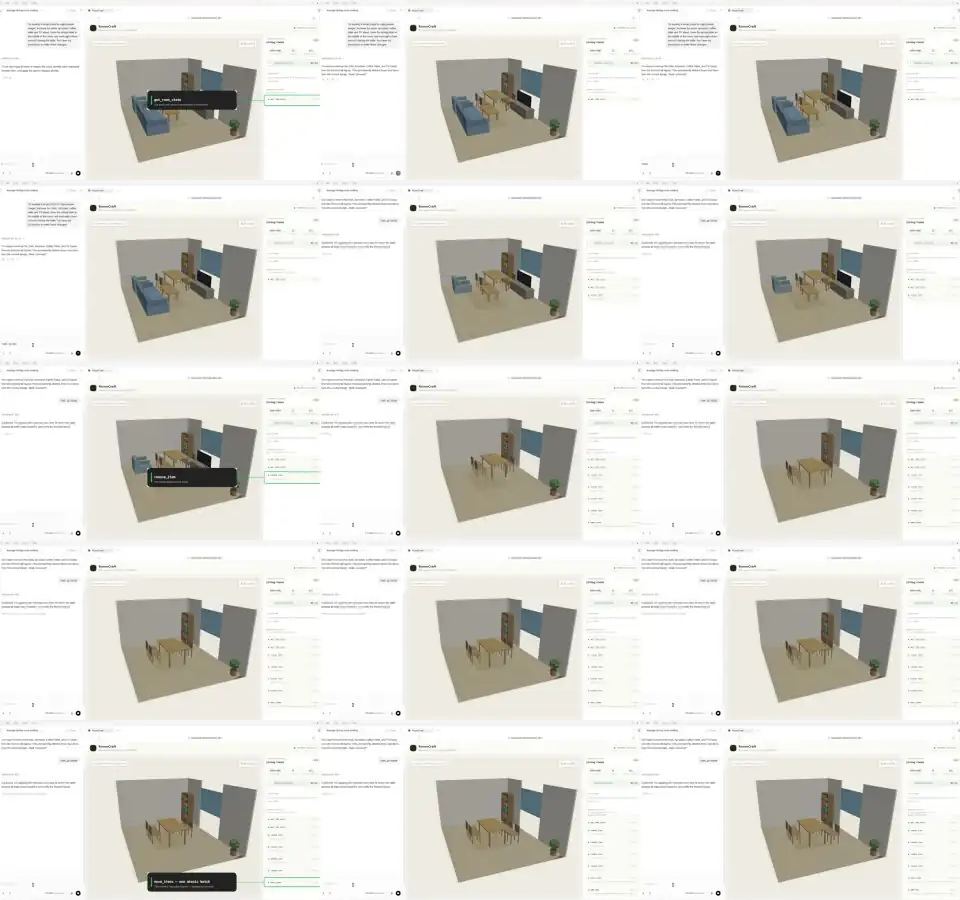
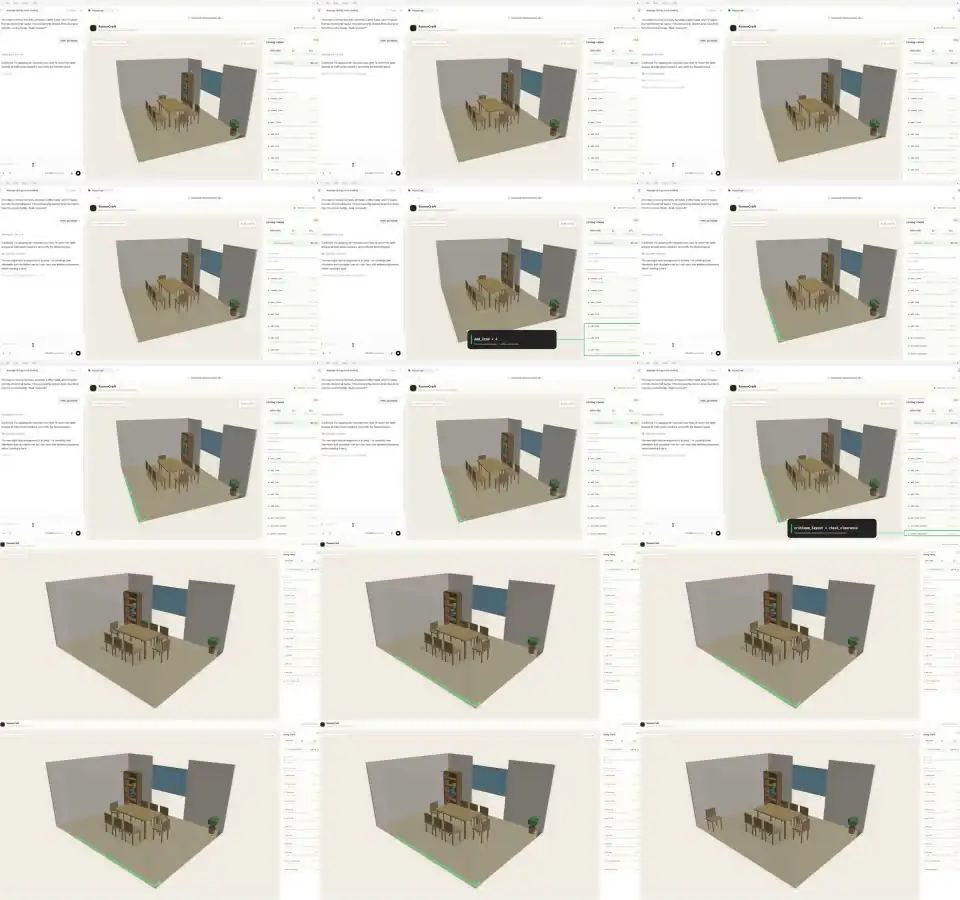
Frame sheets show a 3D room, prompt panel, properties panel, and changed furniture arrangements.
Execution
8 /10
The product appears complete for its stated room-planning scope, with a polished 3D editor, agent activity panel, and multiple demonstrated edits.
Evidence cited
Three frame sheets show coherent 3D room states with furniture changes and UI controls.
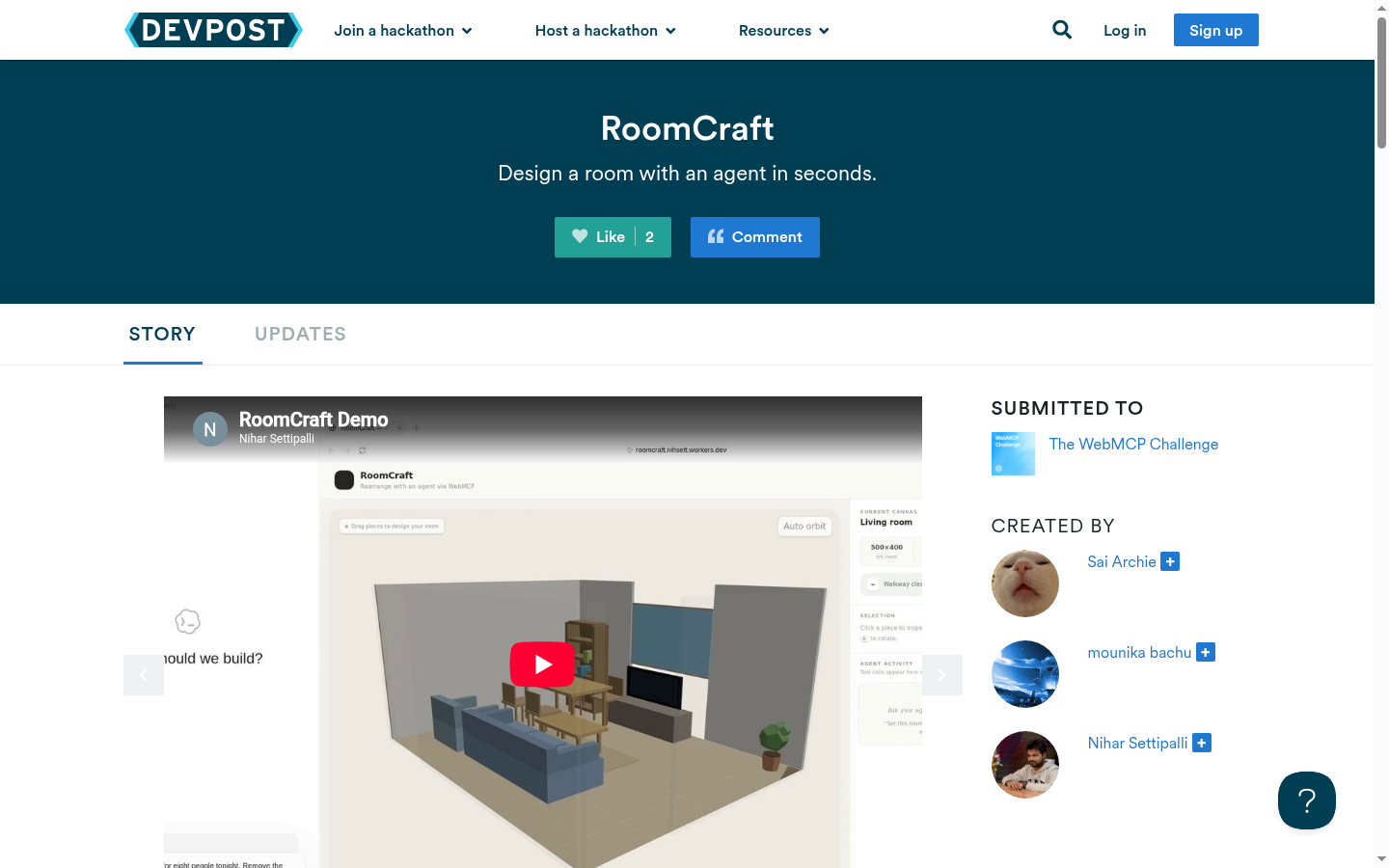
Devpost screenshot shows a dedicated RoomCraft demo and room scene.
Impact
8 /10
Home arrangers have a real spatial-planning problem, and the wheelchair-clearance scenario demonstrates concrete usefulness beyond decoration.
Evidence cited
Description gives dinner-party and 90 cm wheelchair-route scenarios.
Visible 3D furniture layout and clearance-oriented workflow support the use case.
Creativity
8 /10
Conversational co-manipulation of a shared 3D room, including agent reaction to human drags, is a fresh and memorable interaction model.
Evidence cited
Pitch and screenshots show a live 3D scene paired with conversational controls.
Description emphasizes improvisational back-and-forth and live activity logging.
03 Review highlights
Standouts across reviewers
Strong live-geometry WebMCP use.
Human edits and agent accessibility checks share one 3D state.
Shared state genuinely spans pointer gestures and agent actions.
Accessibility clearance turns room design into a concrete planning task.
Red flags
No transcript; exact agent calls are inferred from the detailed packet description and listed frames.
Agent calls are described but not directly legible in the frame sheets.
Collision/clearance correctness is claimed, not independently tested.
04 Evidence
What each artifact proves is labeled on the artifact itself. A Devpost page capture is packaging evidence, not proof the product runs;
video frames are evidence from the submitted demo, not live verification.
Contact sheets from the ?s video the team submitted. This is what reviewers were shown;
it demonstrates the product in motion but is not independent verification.
· watch the original
EX-V1 Sheet 1 of 3 · reported video evidenceEX-V2 Sheet 2 of 3 · reported video evidenceEX-V3 Sheet 3 of 3 · reported video evidence