Origin, access model, eligibility, and substitution are reviewer diagnostics, not judging criteria. Authentication requirements are not penalized.
02 The two blind reviews
Two independent reviewers scored this project blind, from a sanitized evidence packet.
Scores are shown separately so the reasoning stays inspectable. A withheld score means the reviewers differed by more than two points.
Reviewer A (round 1)
confidence 90%
Leverage
8 /10
Transcript-aware semantic editing, shared state, approval before changes, version checks, undo, and visible tool operations make agent collaboration substantially more reliable than UI driving.
Evidence cited
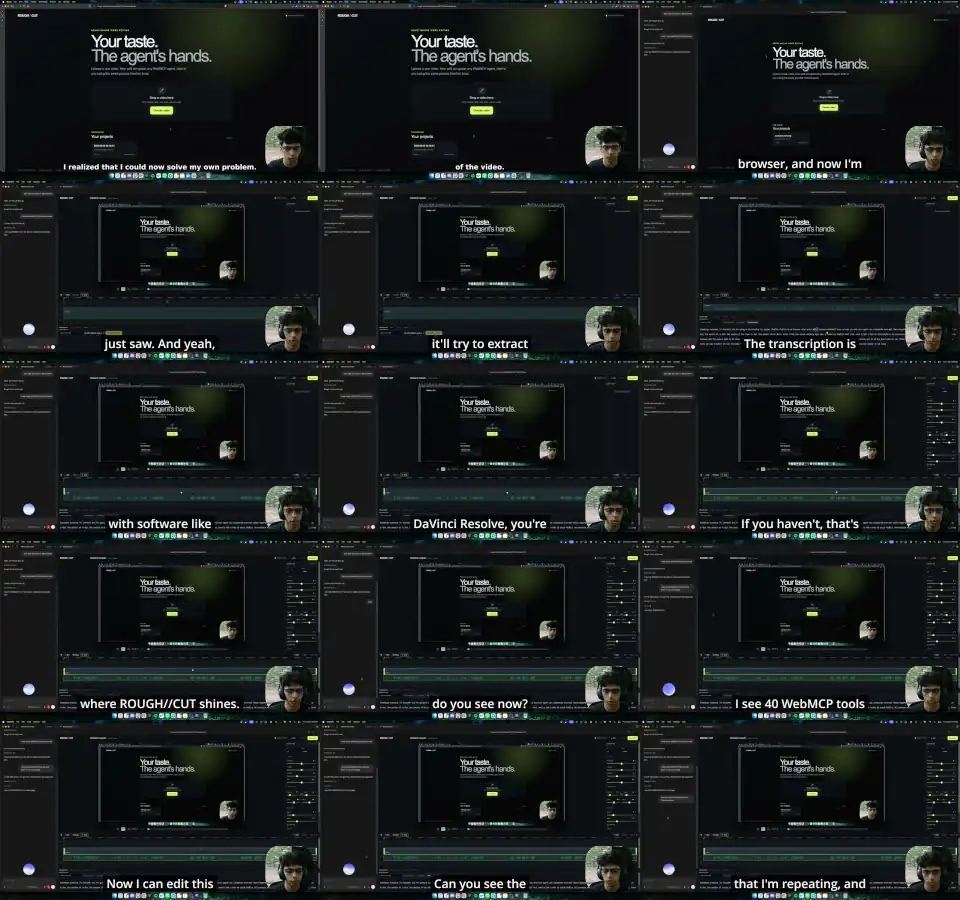
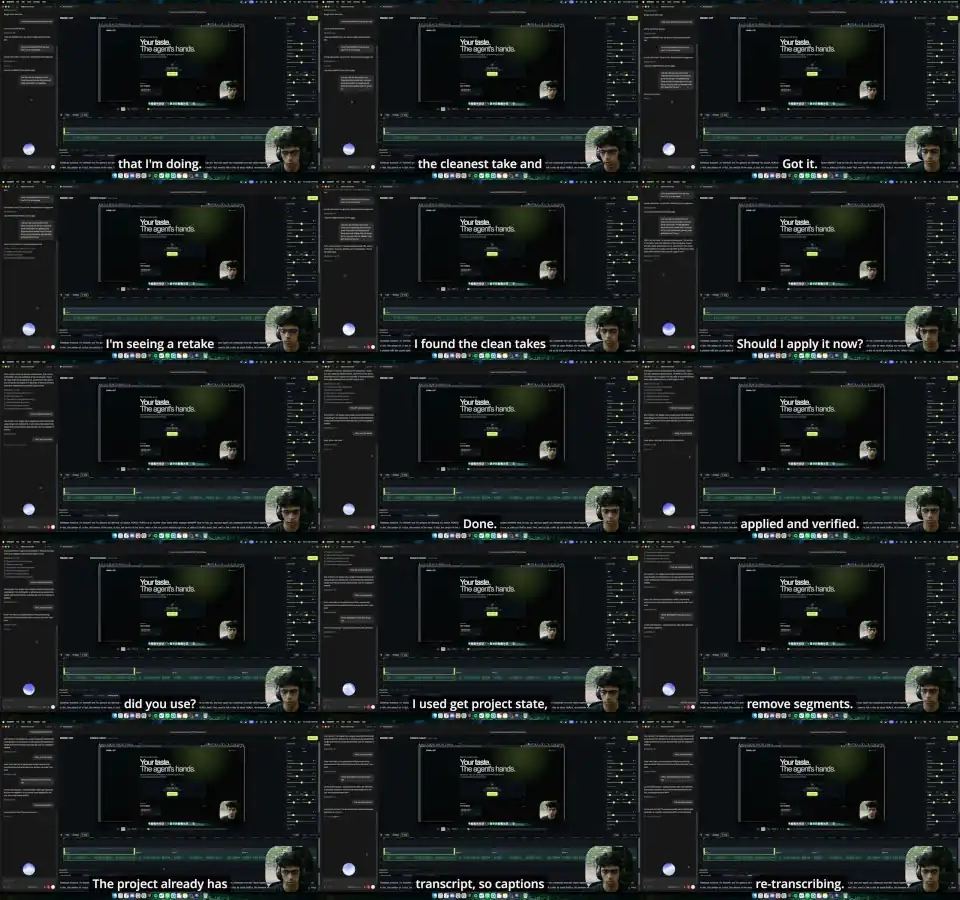
Frames show editor timeline, transcript workflow, clean-take selection, confirmation, applied-and-verified edits, get project state, and remove segments.
About text specifies 40 tools, shared timeline, undo, version checks, and exports.
Execution
9 /10
A 178-second video transcript and frame sheets visibly demonstrate editor workflow, transcription, clean-take selection, approval, applied/verified cuts, and caption reuse.
Evidence cited
Video transcript contains agent dialogue and named tools with completed edit.
Frames show editor/timeline, transcription context, 40 tools, and applied verified edit.
Impact
8 /10
Video creators have a real desire to retain creative control while delegating tedious selection, cutting, transcription, and caption work; the demonstrated workflow addresses it directly.
Evidence cited
Pitch explicitly targets human plus AI editing on one timeline.
Transcript demonstrates removing retakes and generating captions from existing transcript.
Creativity
8 /10
The taste-versus-hands collaboration model and transcript-first, approval-based editing are a fresh synthesis with ambitious breadth.
Evidence cited
Slogan and workflow preserve human creative decisions while agent handles grunt work.
40 tools cover cuts, captions, overlays, transitions, transforms, audio, and more.
Reviewer B (round 2)
confidence 86%
Leverage
8 /10
Structured timeline and transcript tools let an agent perform precise edits while the human retains creative control; this is substantially more reliable than generic UI automation.
Evidence cited
40 WebMCP tools cover cuts, trims, gaps, ordering, captions, transitions, and more
Transcript-driven clean-take selection is demonstrated in the narrated flow
Agent actions update the same visible project and are undoable
Execution
8 /10
The video frames visibly show a coherent dark browser editor with preview, timeline, upload state, and narrated end-to-end editing flow; some fine details remain unverified.
Evidence cited
178-second demo submitted
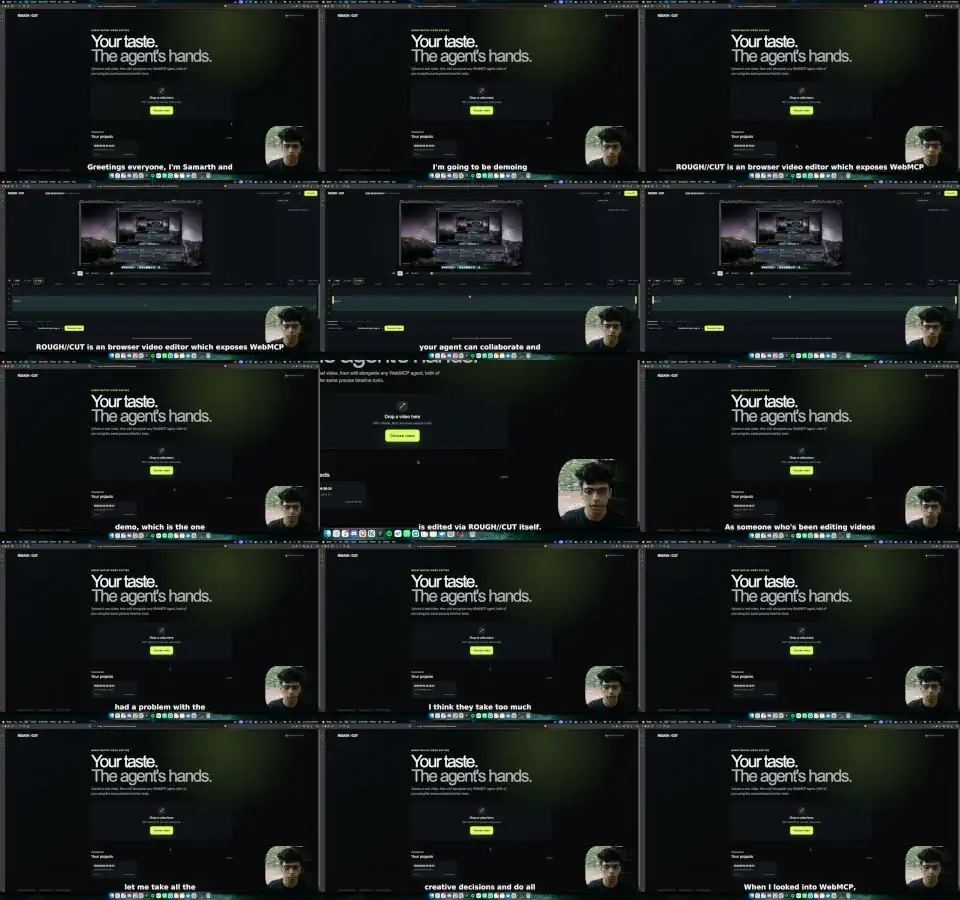
Frame sheet shows landing/upload and editor timeline/preview states
Transcript describes transcription, clean-take removal, captions, and tool verification
Impact
8 /10
Video creators have a real pain point around retaining creative control while delegating repetitive editing work.
Evidence cited
Clear target audience of video editors
Demonstrated use case removes repeated takes and adds captions
Exports include MP4, EDL, and SRT
Creativity
8 /10
The human-taste/agent-hands collaboration model is a strong and memorable application of WebMCP to editing.
Evidence cited
Shared timeline rather than detached generated output
Transcript and timeline are jointly manipulable
03 Review highlights
Standouts across reviewers
Strong end-to-end video evidence with actual agent dialogue and named operations.
Human approval and version safety preserve creative control.
Concrete end-to-end creative workflow
Strong shared-state and undo/version-safety story
Red flags
Frame sheet does not visibly show a tool-call log or agent chat; agent use is primarily narrated
04 Evidence
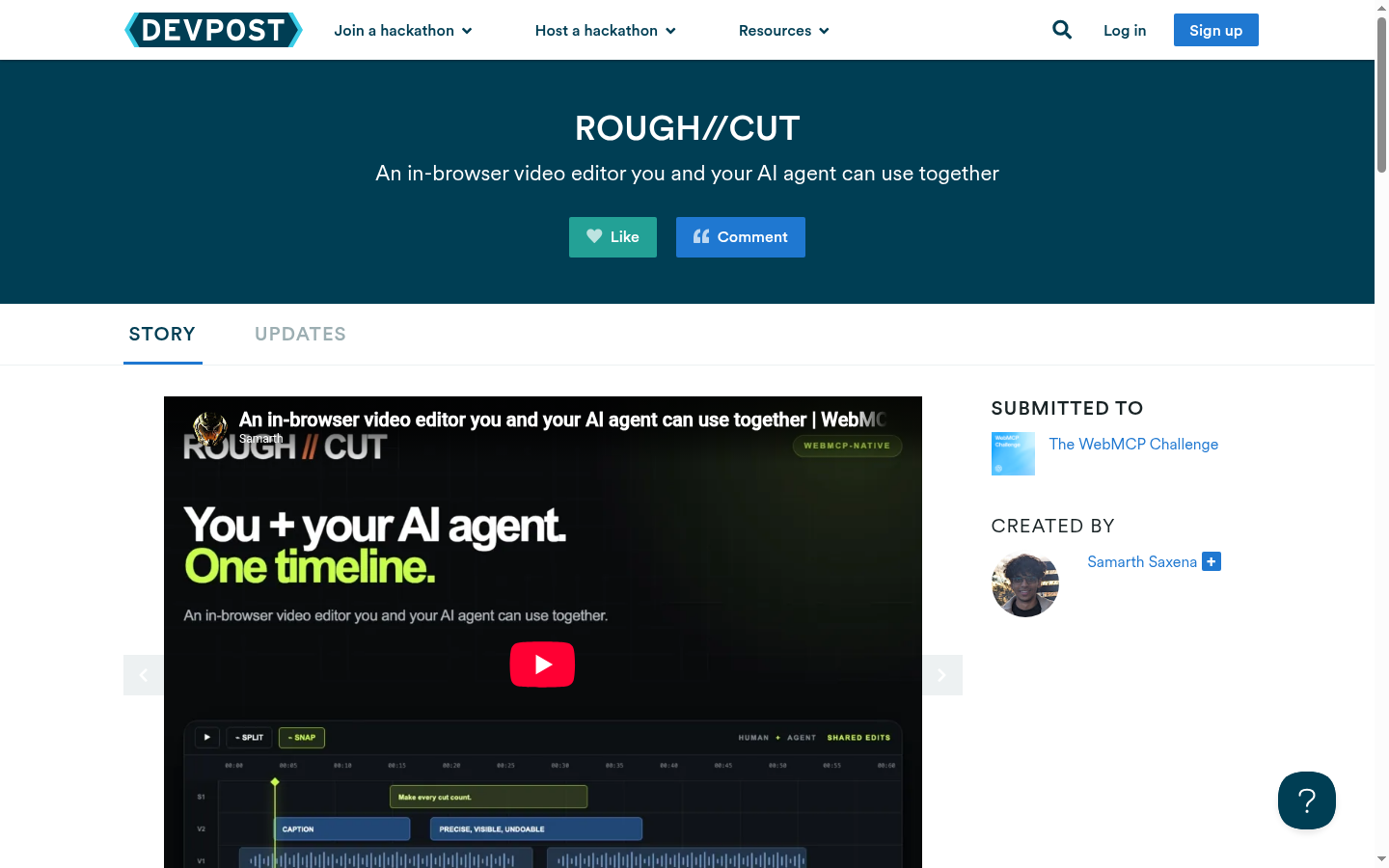
What each artifact proves is labeled on the artifact itself. A Devpost page capture is packaging evidence, not proof the product runs;
video frames are evidence from the submitted demo, not live verification.
EX-V Submitted demo video — “An in-browser video editor you and your AI agent can use together | WebMCP tools”
Contact sheets from the 178s video the team submitted. This is what reviewers were shown;
it demonstrates the product in motion but is not independent verification.
· watch the original
EX-V1 Sheet 1 of 3 · reported video evidenceEX-V2 Sheet 2 of 3 · reported video evidenceEX-V3 Sheet 3 of 3 · reported video evidence