Origin, access model, eligibility, and substitution are reviewer diagnostics, not judging criteria. Authentication requirements are not penalized.
02 The two blind reviews
Two independent reviewers scored this project blind, from a sanitized evidence packet.
Scores are shown separately so the reasoning stays inspectable. A withheld score means the reviewers differed by more than two points.
Reviewer A (round 1)
confidence 75%
Leverage
9 /10
The product's core interaction depends on agents acting on semantic selections in the same live canvas; pixel inference or disconnected backends would lose the central collaboration.
Evidence cited
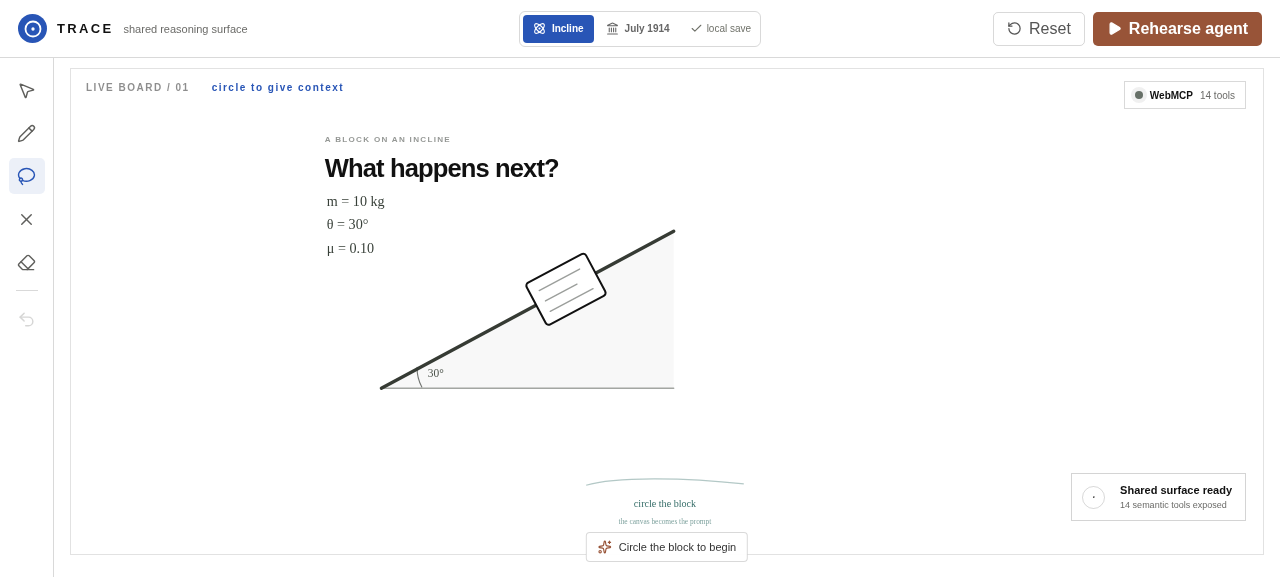
Canvas marks become semantic context an agent can inspect and act on.
Human gestures and agent tools update the same React state.
Crossing out friction changes the model and recomputes dependent expressions.
Execution
8 /10
The packet presents a coherent, ambitious multi-domain workflow and submitted frame sheets, though exact completion and visuals are not independently verified here.
Evidence cited
FACTS reports alive demo and three frame sheets.
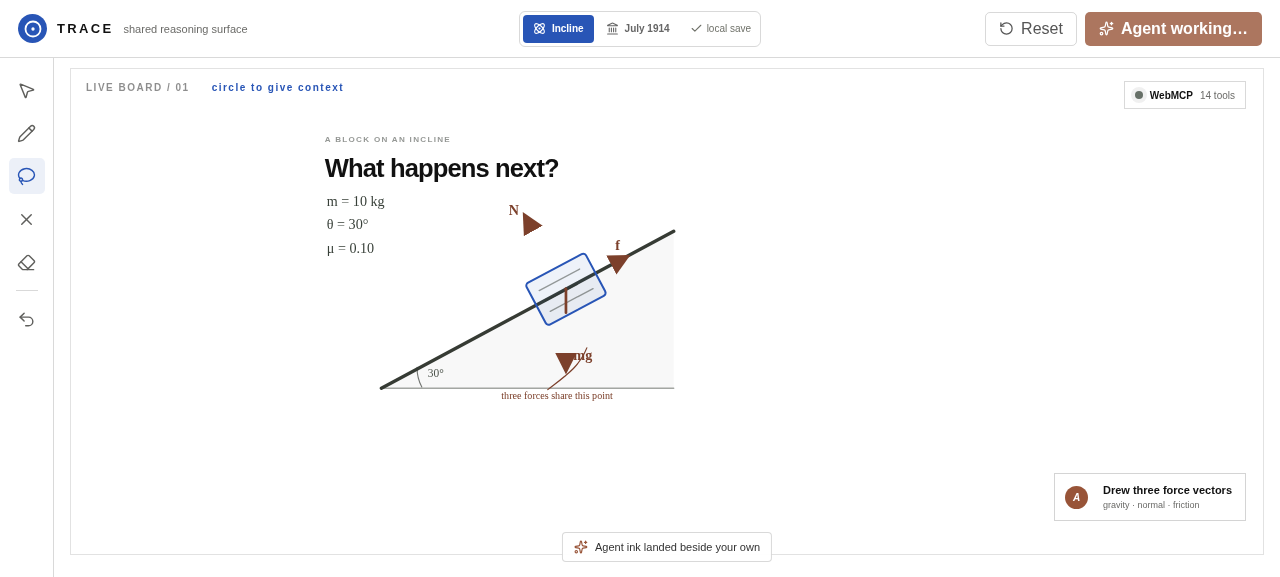
Physics example includes derived acceleration, vectors, animation, and recomputation.
History example includes dated pressures and source perspectives.
Impact
8 /10
Learners and visual thinkers have a real need for manipulable reasoning representations, and the examples show meaningful educational feedback rather than generic chat.
Evidence cited
Explicit physics learner workflow with model recomputation.
History workflow qualifies possibilities and adds source perspectives.
Human and agent strengths are deliberately complementary.
Creativity
10 /10
A canvas-as-prompt interaction with semantic gestures, agent ink, authored reversibility, and cross-domain reasoning is genuinely novel and pursued deeply.
Evidence cited
Circle/cross-out gesture language maps directly to reasoning operations.
Agent draws exactly where reasoning belongs and updates dependencies.
Physics and history worlds demonstrate ambitious scope.
Reviewer B (round 2)
confidence 84%
Leverage
9 /10
The core interaction depends on agents reading semantic canvas state and writing back into the exact artifact; pixel-driving or disconnected chat would lose the shared meaning and dependencies.
Evidence cited
Description says marks become semantic context and agent operations update the same live canvas.
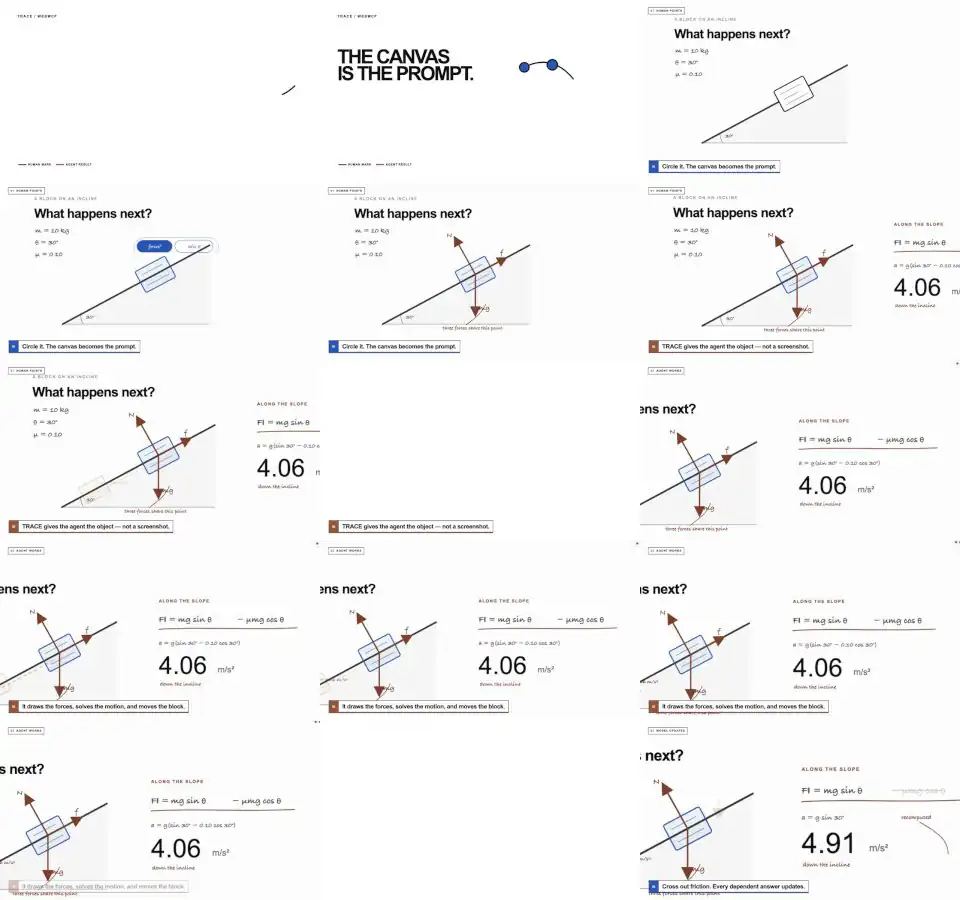
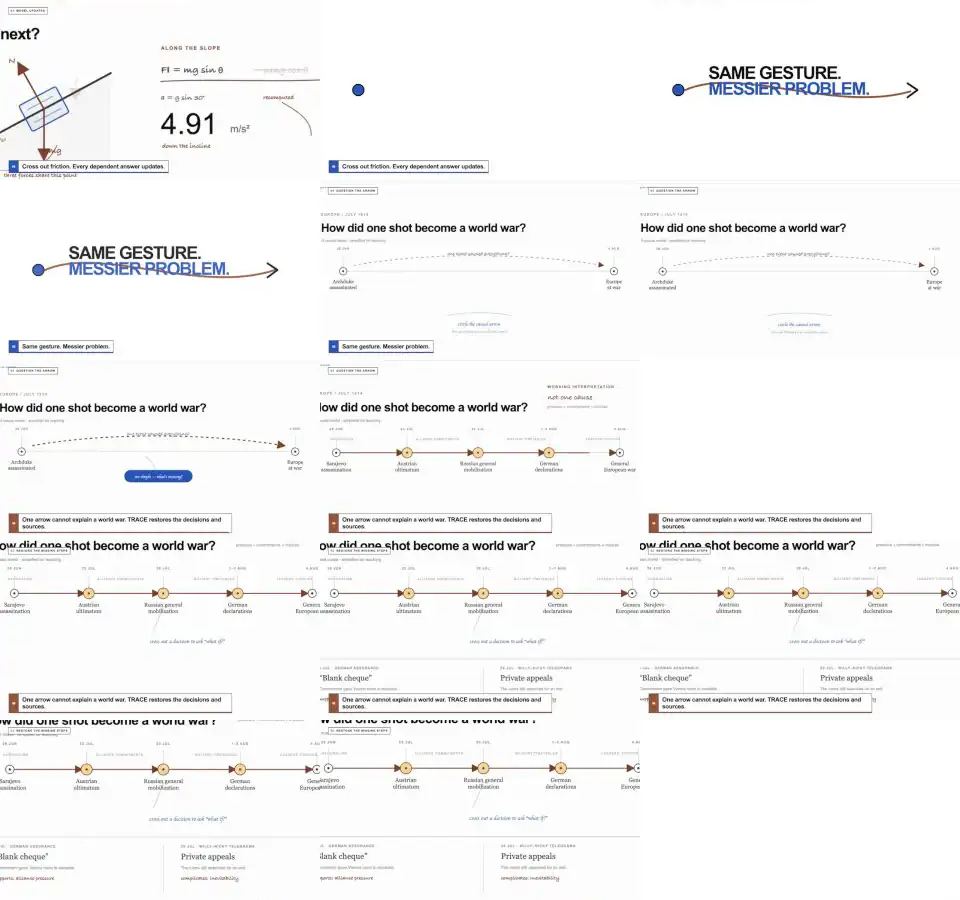
Frame sheets visibly show connected diagrams and changing numeric values around 4.06 and 4.91.
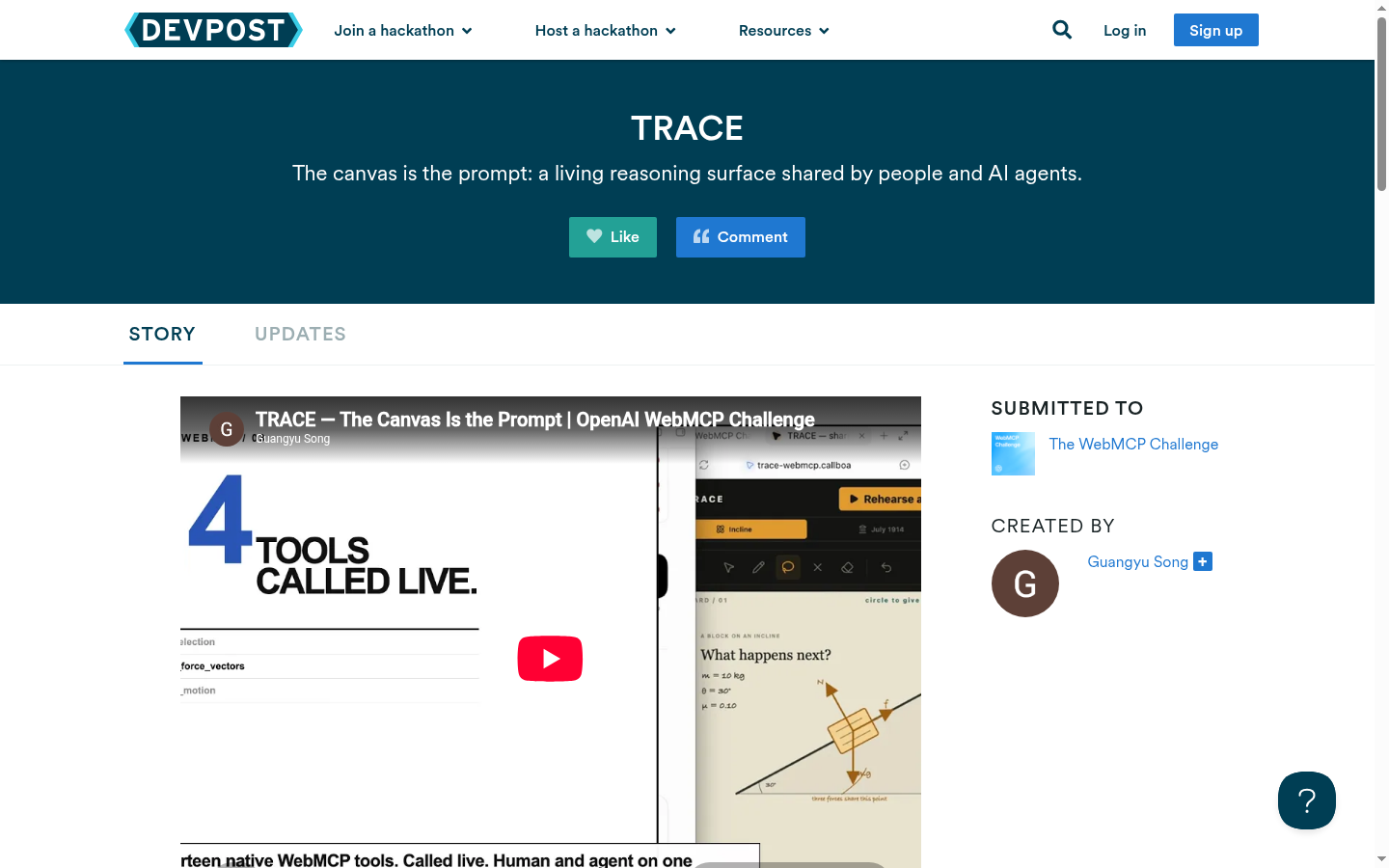
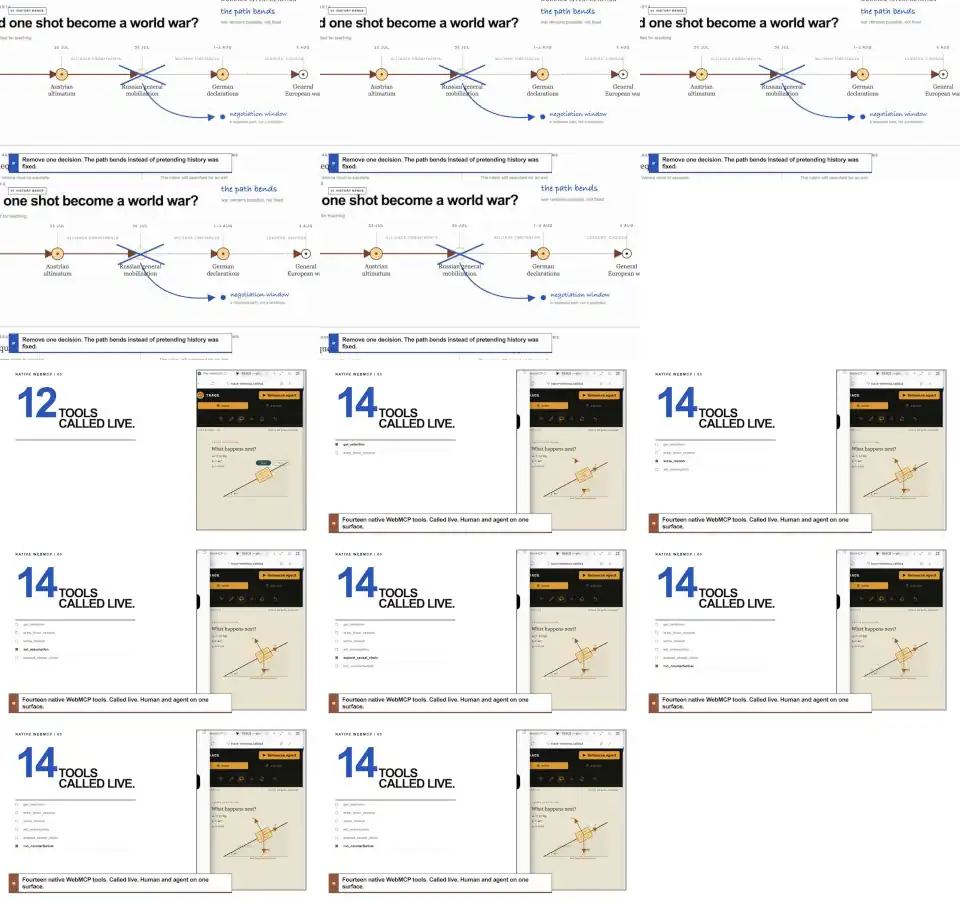
Packaging image states four tools called live.
Execution
8 /10
The packet presents a coherent gesture language, shared canvas, dependent recomputation, and multiple domains; frame evidence supports diagrammatic state changes, though no video is submitted.
Evidence cited
Frame sheets show diagram/card states and numerical changes.
Description specifies undo, authorship, physics recomputation, and history modeling.
Devpost preview visibly advertises live tool calls.
Impact
8 /10
Learners and visual thinkers have a real need for manipulable reasoning surfaces, and the product directly connects human intuition with structured explanation.
Evidence cited
Physics and history learning examples are concrete and audience-specific.
The semantic gesture language and agent-authored reasoning on a living canvas are an unusually original interaction model pursued across domains.
Evidence cited
Circle/cross-out gestures alter the semantic model and dependent computations.
Agent ink appears where reasoning belongs rather than in a separate chat.
03 Review highlights
Standouts across reviewers
Semantic shared canvas rather than chat wrapper.
Visible authorship and undo across human/agent actions.
Strong shared-artifact model.
Visible numerical recomputation and domain transfer.
Red flags
No transcript; visual details could not be independently checked.
No submitted video; frame sheets are contact sheets rather than a directly narrated run.
04 Evidence
What each artifact proves is labeled on the artifact itself. A Devpost page capture is packaging evidence, not proof the product runs;
video frames are evidence from the submitted demo, not live verification.
Probe captures come from Stage 2 interactive testing of the live product by a reviewer.
EX-01 Devpost page capture · packaging evidence, not runtime proof
· sourceEX-02 Live probe at Stage 2 · observed product behavior, reviewer-drivenEX-03 Live probe after interaction · observed product behavior
EX-V Submitted demo video
Contact sheets from the ?s video the team submitted. This is what reviewers were shown;
it demonstrates the product in motion but is not independent verification.
· watch the original
EX-V1 Sheet 1 of 3 · reported video evidenceEX-V2 Sheet 2 of 3 · reported video evidenceEX-V3 Sheet 3 of 3 · reported video evidence